Varanasi · Etiquette · 6 min read
Dev Deepawali etiquette: how to be a good guest on the ghats
A festival of lamps is also an act of worship, and a few steps from the lamps, a place where the dead are cremated. How to behave on the night.
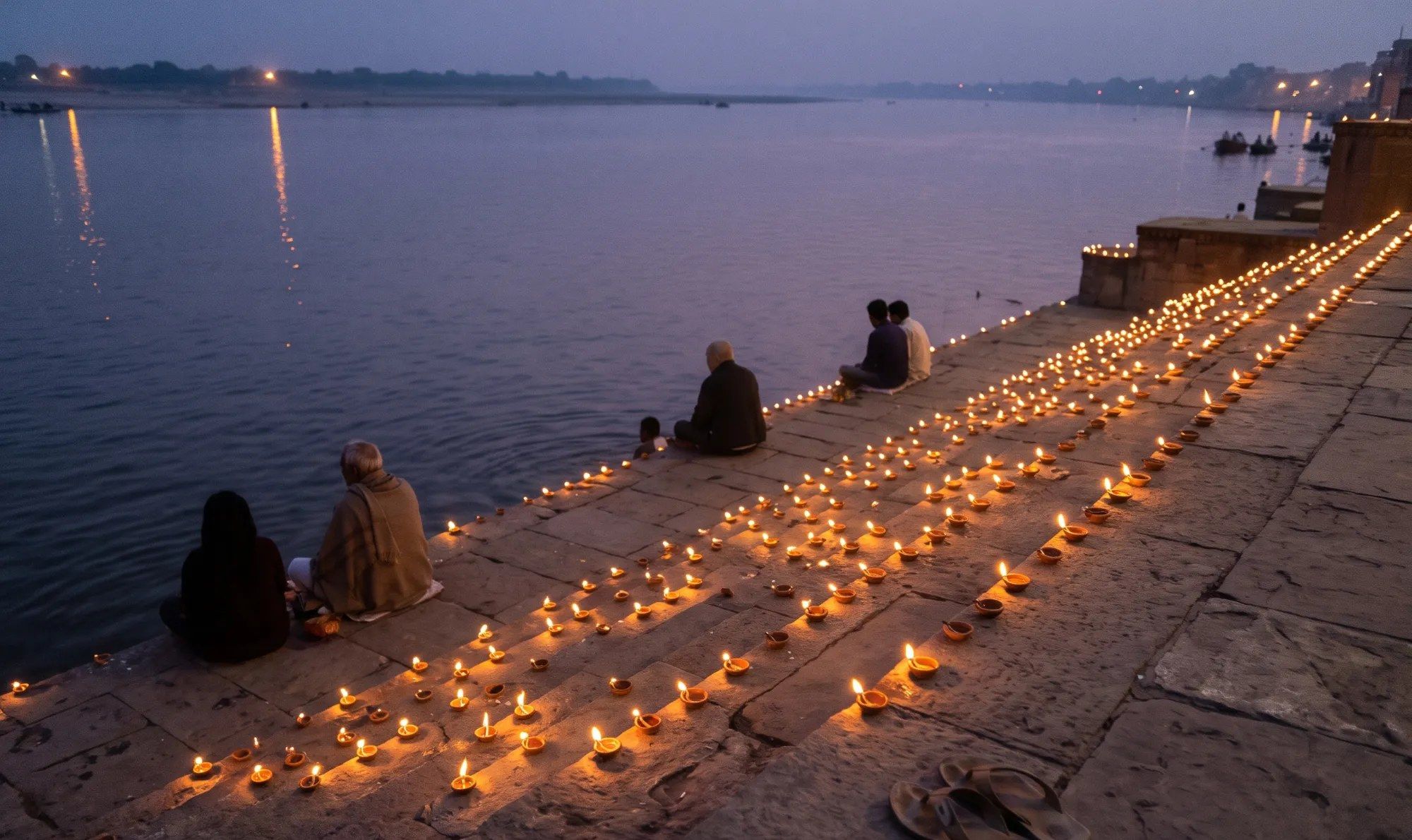
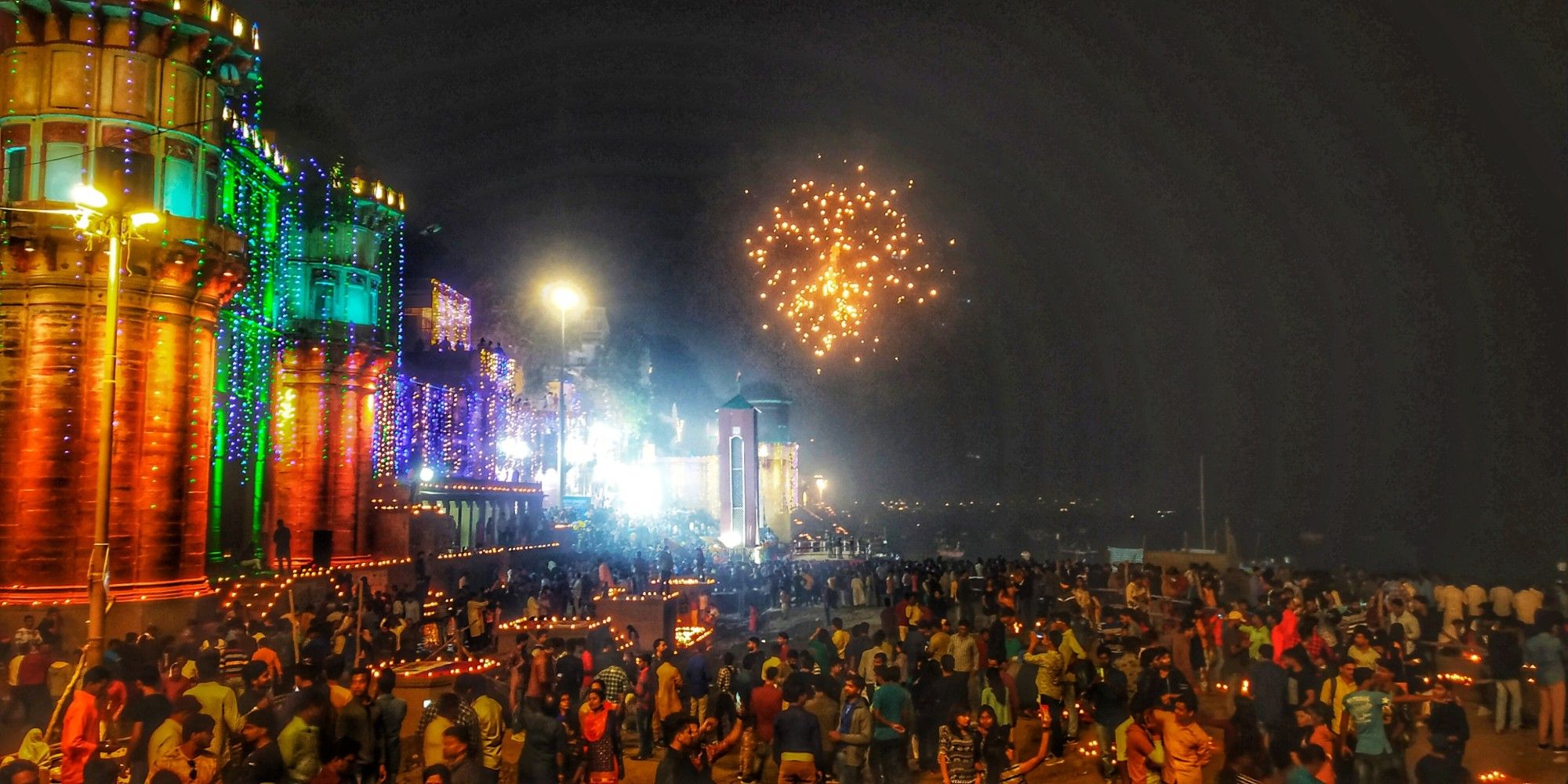
Dev Deepawali is a festival, a spectacle and an act of worship at the same time. People bathe in the Ganga and offer lamps to the river, which is what Wikipedia calls kartik snan and deepdan. Visitors share the steps with them. A few ghats away, cremations go on as they do every night. This page is about how to be a good guest.
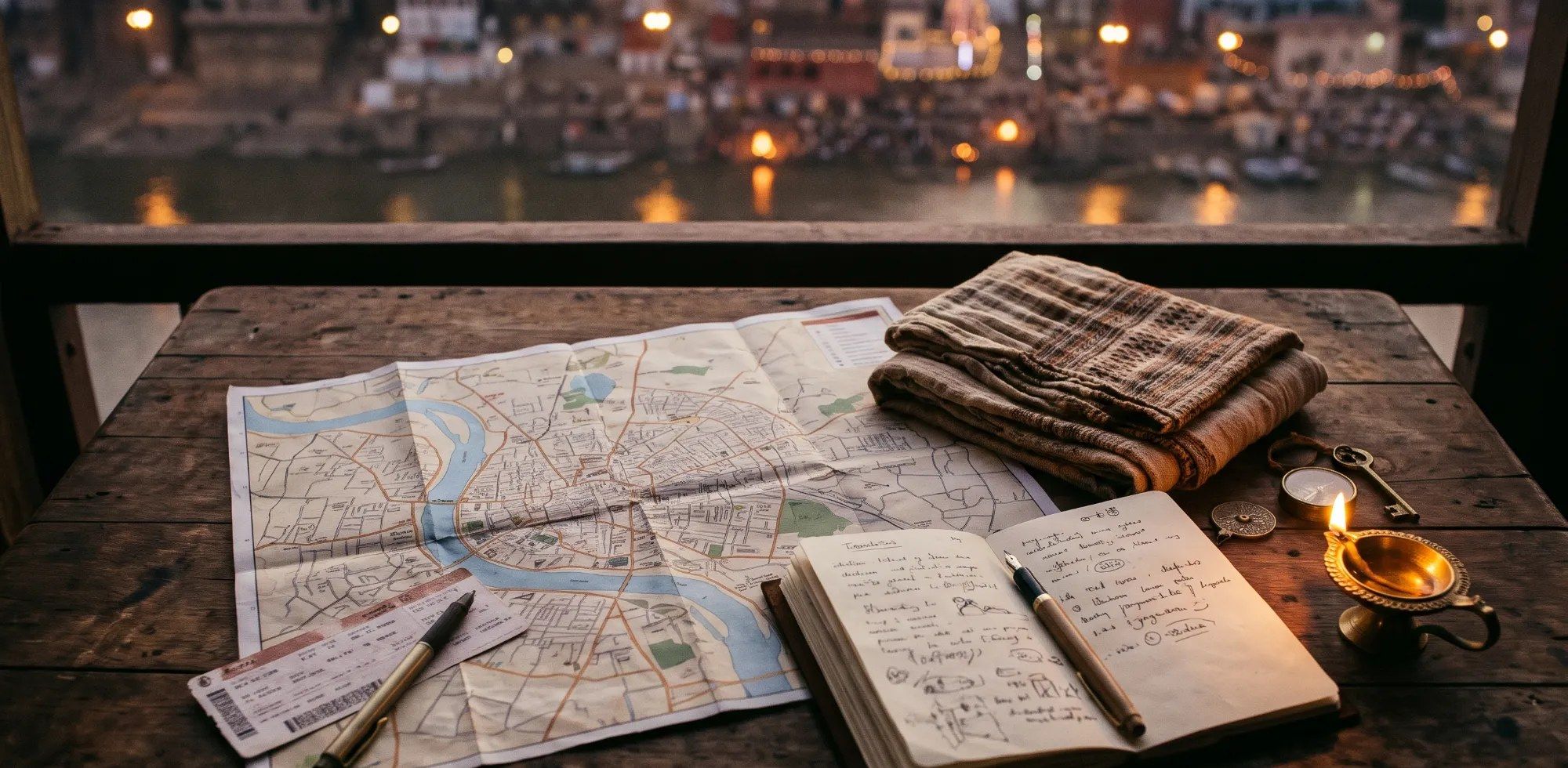
New to the night? Start with our Dev Deepawali 2026 guide. To plan your trip, see the checklist.
Remember what you are looking at
The lamps are offerings, not decorations. Walk around them, not over them. Keep your voice low near the aarti, and do not stand in front of people who have come to pray. If you are asked to move, move.
Photographs and people
Ask before you photograph anyone, and accept a no. That applies most to people who are bathing, praying or performing a ritual. Do not use a flash on people at prayer. In a dense crowd, keep your camera out of other people’s space instead of pushing for an angle.
Cremations are not for photographs. A travel guide advises against photographing cremations, and we would go further: do not take out a phone near the cremation ghats at all.
Drones. In 2024 police declared a no-fly zone across the whole Varanasi commissionerate from 12 to 16 November, banning drones, kites, balloons and paragliders. Rules for 2026 are not published yet, so check before you pack a drone.
The cremation ghats
Cremations at the burning ghats go on at all hours. Keep a respectful distance, keep your voice down and do not treat them as a sight. Be wary of anyone who approaches you near them. The same travel guide warns about fake requests for money for cremation wood and about unofficial guides, and recommends licensed taxis or rickshaws in the evening. If you want to give, give through an organisation you have checked.
Lamps and the river
If you float a lamp, buy it from the person who made it. Keep plastic, wrappers and packaging out of the river, and take your rubbish with you.
Money and touts
Agree prices before you start: boats, guides, photographs, seats. The paid seating at the Dashashwamedh aarti is run by one organisation, and Varanasi Guru warns that touts sell “reserved seats” that do not exist. See where to watch.
What we could not confirm
We do not have a published list of rules for 2026, and customs vary from ghat to ghat. If a priest, a boatman or a police officer tells you something different, follow them. This page is a guide to courtesy, not a legal notice.
Questions readers ask
Can I photograph the cremations?
No. A travel guide advises against it, and we would say the same. The cremation ghats are working places of mourning, not scenery.
Can I photograph people at the ghats?
Ask first and accept a no. Take extra care with people who are bathing or praying.
Can I fly a drone?
In 2024 police declared a no-fly zone across the Varanasi commissionerate from 12 to 16 November covering drones, kites, balloons and paragliders. Check the notice for 2026 before you pack one.
What should I do about donation requests?
A travel guide warns about fake requests for money for cremation wood and about unofficial guides near the cremation ghat. If you want to give, do it through an organisation you have checked, not to someone who approaches you.
Sources
Corrections
No corrections so far. If something is wrong, tell us below and we will fix it here with a dated note.
Help us get it right