Mahabaleshwar in Monsoon: A Slow Guide to Mist, Markets and Ghats
How to plan a wet-season Mahabaleshwar trip without turning it into a rushed viewpoint checklist.
Open guide index
How to plan a wet-season Mahabaleshwar trip without turning it into a rushed viewpoint checklist.
Why monsoon changes the place
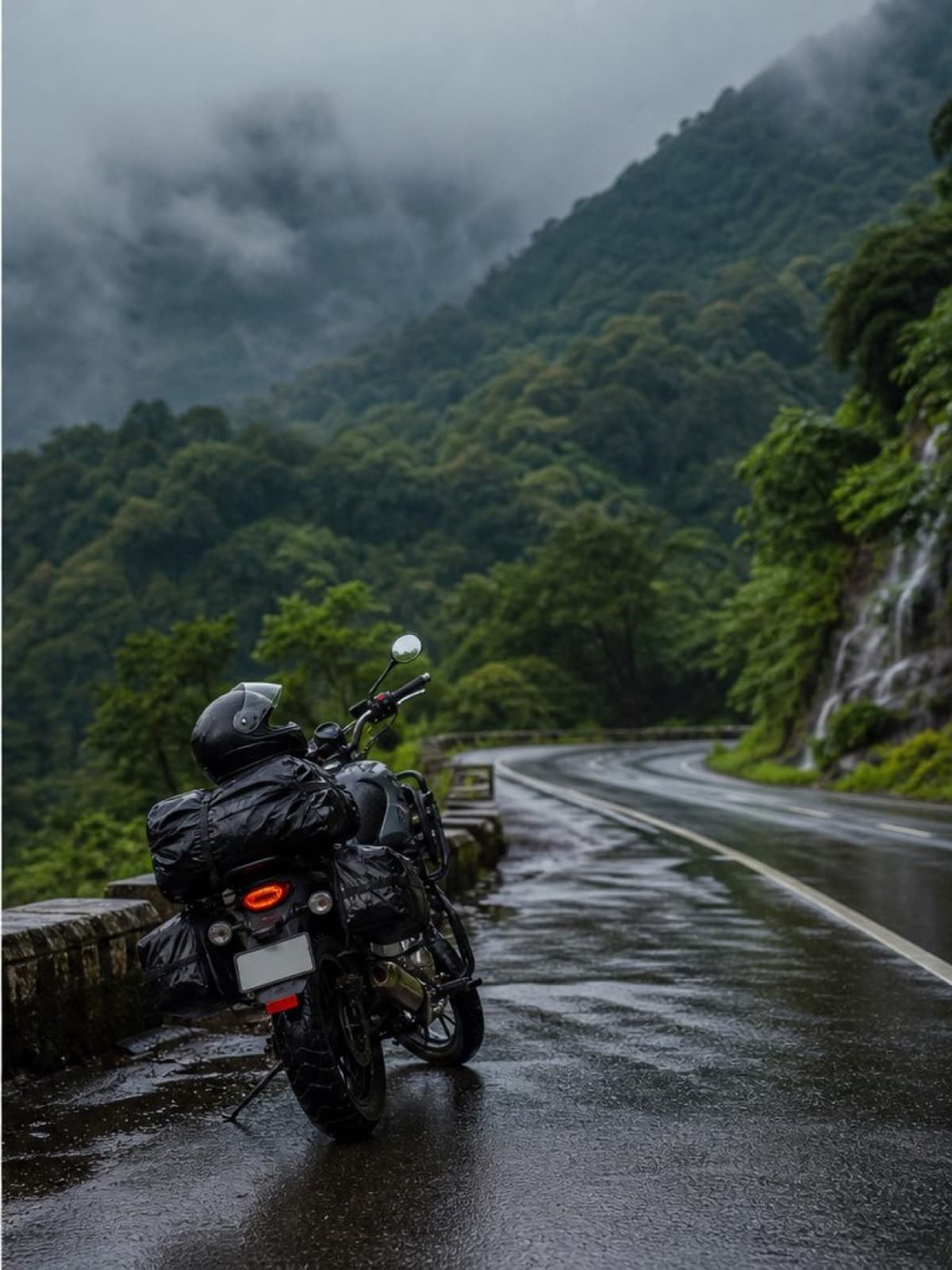
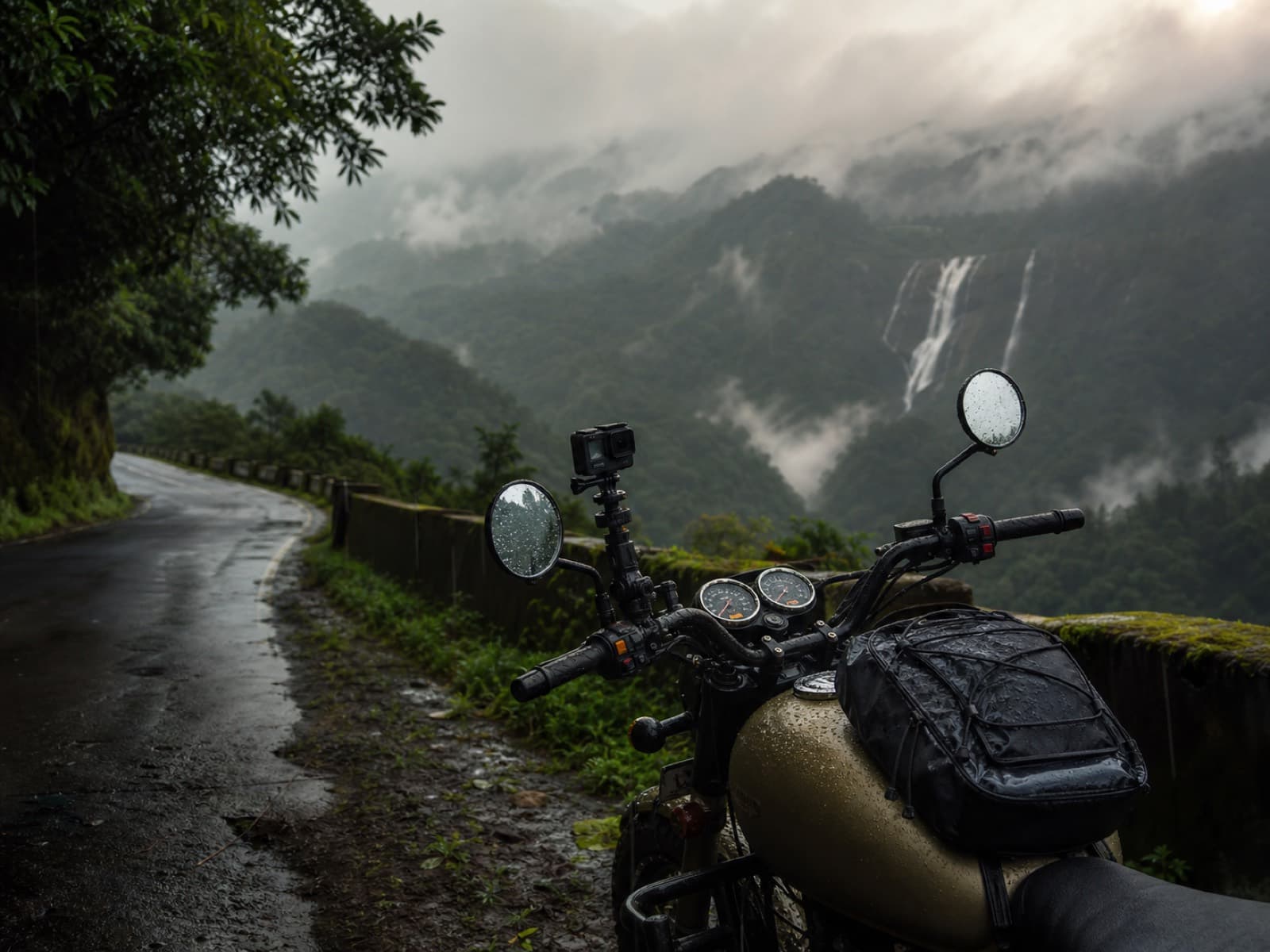
Mahabaleshwar is not at its most convenient in the rain, but it is at its most atmospheric. The viewpoints disappear and return, the forest edges grow louder, and the road itself becomes part of the story.
Between June and September the plateau gets some of the heaviest rainfall in Maharashtra, and the town changes character completely. The summer crowds thin out, hotel prices soften, and the famous viewpoints spend long stretches inside cloud. What you get in exchange is a working hill station at its greenest: waterfalls that only exist in these months, moss on every wall, and the smell of wet forest that no October visit can reproduce.
This is why the monsoon trip needs a different mindset. In peak season you can run a checklist — six viewpoints, boating, market, home. In the rain, the fog decides your itinerary, not you. Travellers who accept that come back describing the best trip of their year; travellers who fight it come back with photographs of grey walls of mist and a sense of having been cheated.
Plan the trip around slower movement: one major viewpoint window, one market walk, one warm meal, and one short detour toward Panchgani or Tapola rather than a packed route map.
How to reach, and when the drive is the point
Mahabaleshwar sits about 120 km from Pune — roughly three hours through Wai or Panchgani — and about 250 km from Mumbai, which takes five to six hours in monsoon traffic. The nearest railhead is Wathar and the nearest airport is Pune, but this is overwhelmingly a road trip destination, and in the rains the drive itself is half the reason to go.
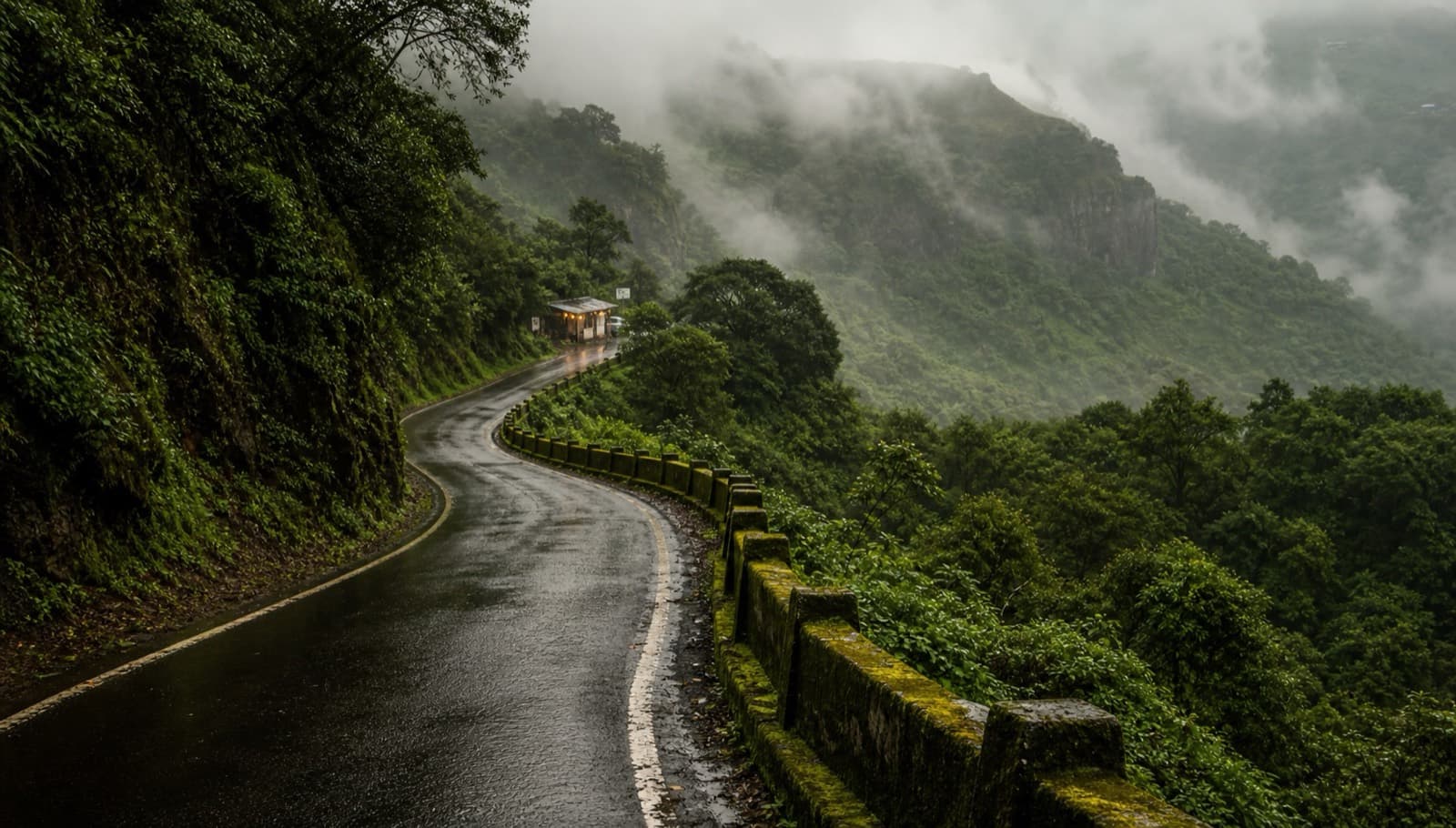
From Pune, the climb after Wai is the highlight: the ghat switches back through farmland that turns emerald in July, with waterfalls appearing at the roadside as you gain height. From Mumbai, leave early — before seven — so the expressway and the Poladpur–Ambenali ghat sections happen in daylight and before weekend traffic stacks up.
Whichever side you come from, fuel up before the final ghat, keep the washer fluid topped, and treat the last hour as slow scenic driving rather than a stretch to push through. Fog on these roads can drop visibility to a car length within minutes, and the correct response is always speed reduction, not fog lamps and hope.
A simple two-day route
Day one works best as an arrival day: Lingmala waterfall if visibility is kind, Venna Lake for an easy walk, then the old market for corn, chikki, strawberries, and rain gear you forgot to pack.
Venna Lake in the rain is a different experience from the pedal-boat postcard of summer — quieter, wrapped in mist at the edges, with roasted corn sellers doing their best business of the year. Give the old market more time than feels necessary. The lanes behind the main strip hold the older shops: strawberry and mulberry products from the surrounding farms, chikki made in the same families for generations, and leather chappals that outlast anything from a mall.
On day two, begin early for Arthur Seat or Kate's Point, keep Panchgani as a flexible detour, and leave enough buffer for fog, traffic, and wet ghat driving.
The early start matters more in monsoon than any other season: the clearest windows tend to come between dawn and mid-morning, before the day's cloud builds. If Arthur Seat is open, you get the Sahyadris' most dramatic drop with the valley smoking below you. If it is shut inside fog, Kate's Point and the Needle Hole rock sit lower and clear more often. Panchgani's Table Land works as the fallback — a flat laterite plateau that is atmospheric even in light rain.
When the fog closes in
Every monsoon trip here includes at least one stretch where visibility simply ends. This is not the failure case; it is part of the format. The town has a wet-weather repertoire if you stop treating viewpoints as the only currency.
The Tapola road south of town is the best fog drive in the region — a narrow forest road toward the Shivsagar backwaters where the mist between the trees is the attraction rather than the obstruction. Old Mahabaleshwar's Panchganga temple, where five rivers are said to rise, is centuries older than the British hill station and sits quietly in the rain with none of the viewpoint crowds.
And there is the simplest option: a long lunch. Strawberry-and-cream at a farm stall, vada pav from a market cart, or a full Maharashtrian thali while the rain works on the roof. Shopkeepers here have watched fifty monsoons and will tell you which viewpoint might open by afternoon more accurately than any app.
What a monsoon weekend costs
A relaxed weekend for two runs roughly ₹8,000–15,000 including a mid-range stay, fuel, and food — and monsoon is the cheap end of that range. Hotels that hold firm in May negotiate in July, and walk-in rates midweek can drop well below the booking sites.
Budget the fuel honestly: the Pune round trip is about 250 km and the Mumbai round trip about 500 km, plus ghat driving's heavier consumption. Food is where the trip earns its money — market snacks and farm stalls cost little, and even the better hotel dining rooms are modest by city standards.
The one thing not to economise on is the vehicle. If your tyres are near the end of their life or your wipers streak, fix that before the trip, not after the first emergency stop in fog.
Is Mahabaleshwar safe in monsoon?
Use tyres and brakes you trust, avoid late-night ghat driving, carry a dry bag for electronics, and do not chase waterfall edges for photographs.
The specific risks are worth naming. Fog is the big one — it closes viewpoints fast and turns familiar ghat corners blind, which is why the driving day should end before dark. Wet laterite and moss make viewpoint railings and waterfall approaches genuinely slippery, and most monsoon accidents here are falls at the edges, not crashes on the road. Landslide-related delays happen on the approach ghats in heavy spells; check road status before leaving and keep a half-day of slack in the plan.
None of this argues against the trip. It argues for the monsoon shape of it: early starts, daylight driving, flexible bookings, and a willingness to swap the itinerary for the weather in front of you.
The best monsoon travel in the Sahyadris rewards patience. If visibility closes, switch from viewpoint hunting to food, forests, and stories from local shopkeepers.
Interactive route map
Mahabaleshwar monsoon orientation map
Key stops
- - Venna Lake
- - Old Mahabaleshwar market
- - Arthur Seat
- - Panchgani detour
Terrain warnings
- - Fog can close viewpoints fast
- - Avoid late-night ghat driving
- - Keep waterfall edges off-limits
Common questions
Frequently asked questions
How many days are enough for Mahabaleshwar in monsoon?
Two days work well: an easy arrival day around Venna Lake and the old market, then an early start for Arthur Seat or Kate's Point with Panchgani as a flexible detour. Build in buffer time — fog and wet ghat traffic slow everything down.
Is Mahabaleshwar worth visiting during the rains?
Yes, if you go for atmosphere rather than a viewpoint checklist. Viewpoints disappear and return with the fog, waterfalls run full, and the market and forest roads are at their most alive. Go in October to June instead if you want guaranteed clear views.
What should I pack for a monsoon trip to Mahabaleshwar?
A proper rain shell, footwear with grip, a dry bag for electronics, and a vehicle with tyres and brakes you trust. Skip umbrellas at the windy viewpoints — they are useless in ghat weather.