Theyyam: Watching a God Take Human Form in North Kerala
A respectful guide to witnessing Theyyam — where it happens, how the season works, and how to attend without turning ritual into spectacle.
Open guide index
A respectful guide to witnessing Theyyam — where it happens, how the season works, and how to attend without turning ritual into spectacle.
What Theyyam actually is
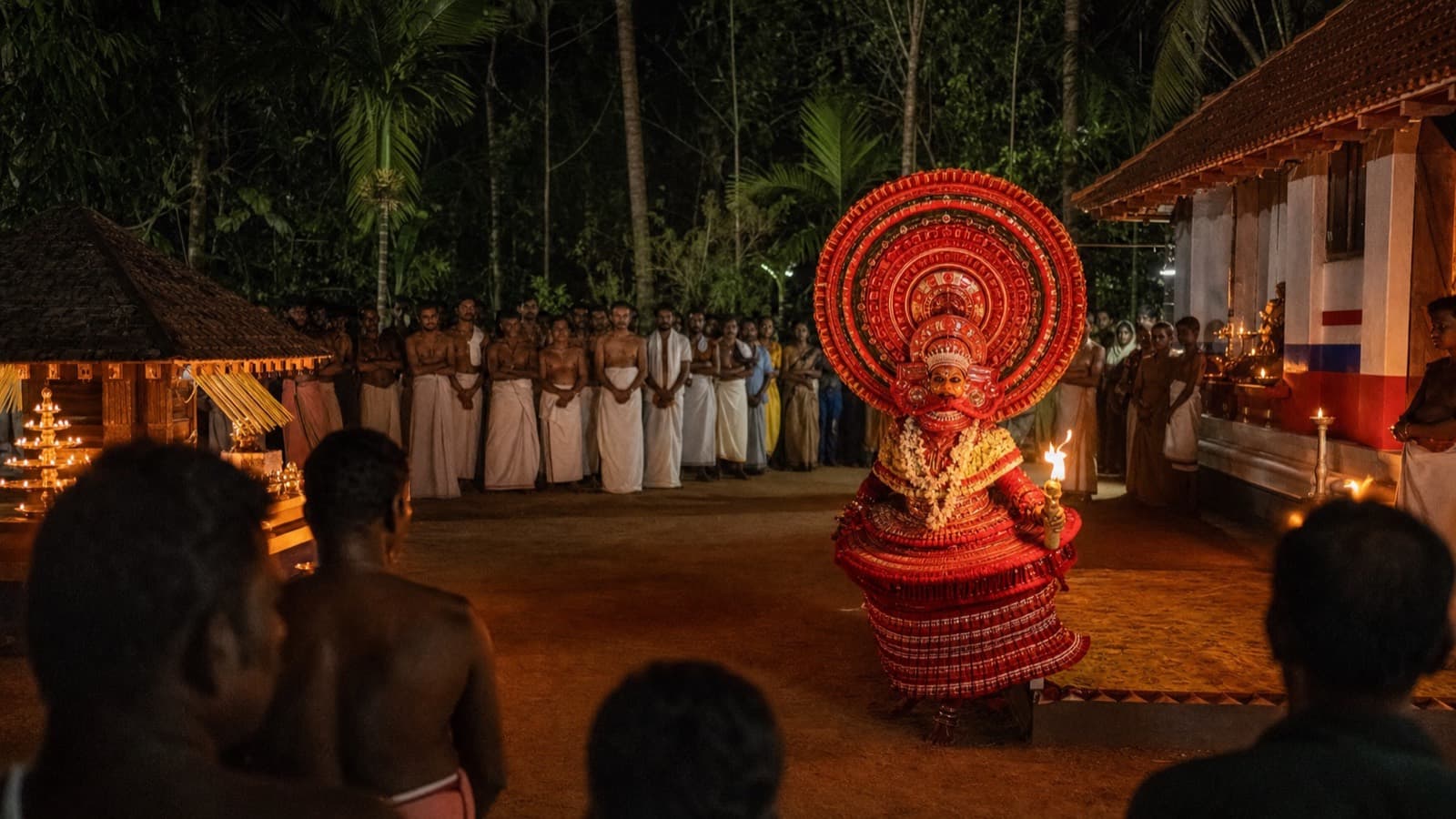
Theyyam is not a dance performance staged for visitors. It is a centuries-old ritual of North Malabar in which a performer, after long preparation, is believed to become a deity or ancestral spirit. Devotees come not to watch a show but to seek blessings, make vows, and speak with the god who has, for a few hours, taken human form.
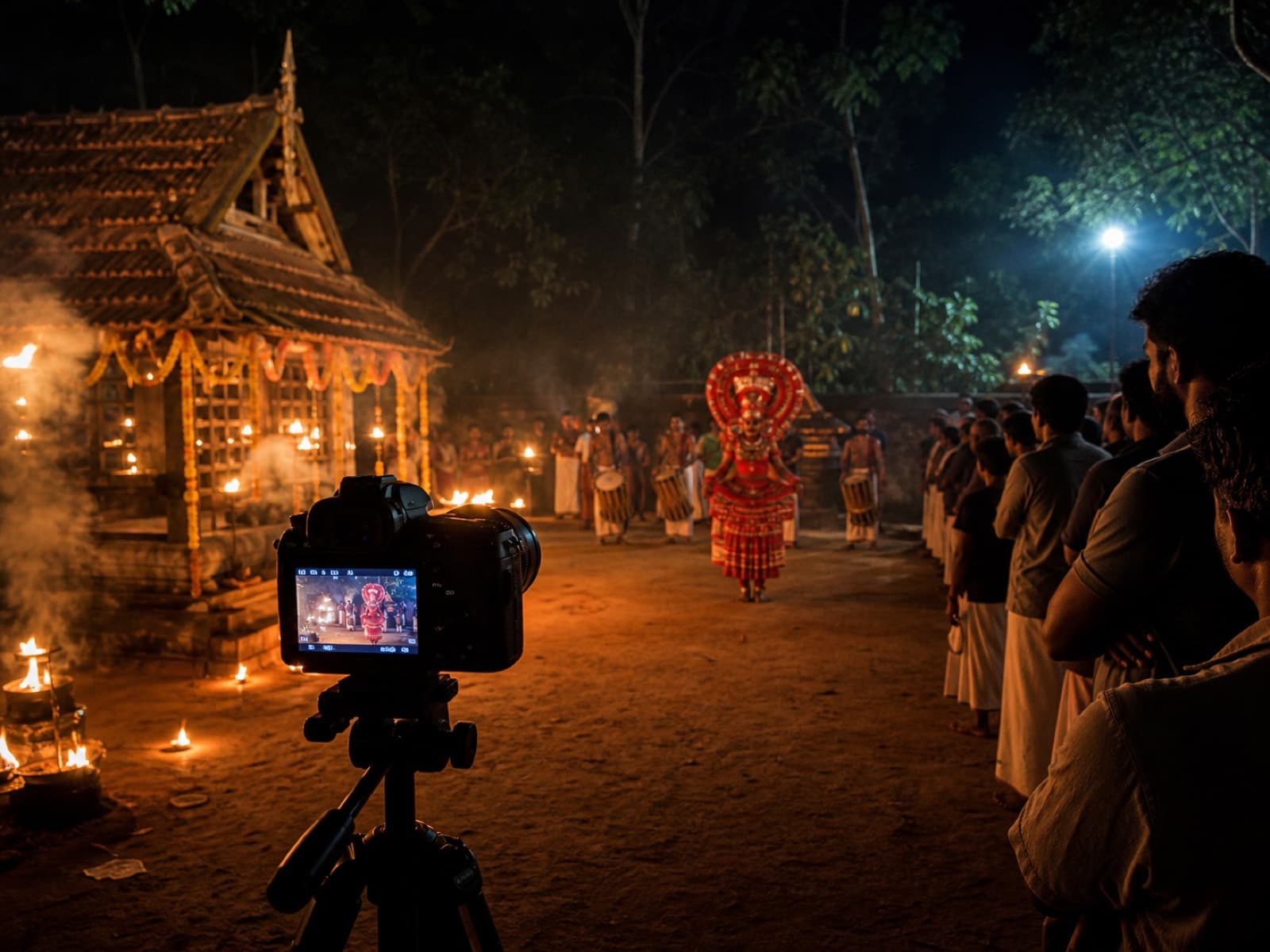
The costumes, towering headdresses, fire, and face paint are extraordinary to see — but they sit on top of a living belief system tied to specific shrines, families, and oral histories. Understanding that changes how you stand at the edge of a kavu and what you do with your camera.
When and where to see it
The main Theyyam season runs roughly from October or November to April or May, with performances tied to individual shrine calendars rather than a single ticketed schedule. Most happen in and around Kannur and Kasaragod districts, often overnight or beginning before dawn.
There is no central booking office. The most reliable way in is through a local homestay, a Kannur-based host, or someone from the community who can tell you which kavu has a Theyyam on which night, and whether visitors are welcome that day.
How to attend with respect
Dress modestly, arrive quietly, and let devotees have the front. Always ask before photographing the performer or the rituals, and accept a no — some moments are not for cameras at all. Never treat the costume as a backdrop for portraits of yourself.
Switch off flash, do not block the path of the Theyyam as it moves, and follow the lead of locals on where to sit or stand. If you are offered prasadam or a blessing, receive it graciously. The best way to thank a community is to spend locally and to leave the place exactly as you found it.