
North

Spiti Valley Travel Guide: Road Trip & Season

High passes · Acclimatisation

Monasteries above 4,000 m, river crossings, fossil villages, and one of India's most demanding and rewarding mountain road trips.

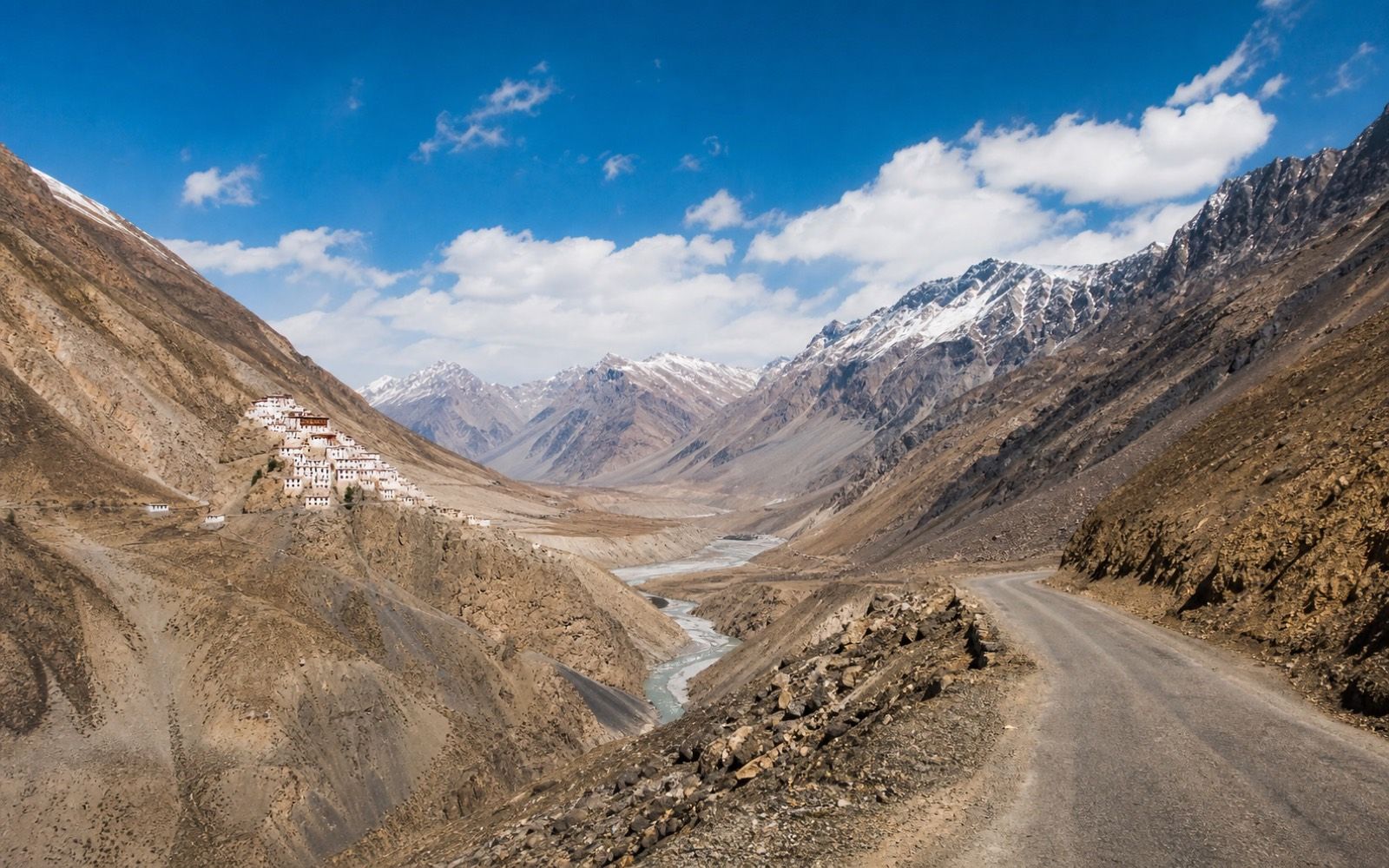
High mountain road cutting through Spiti Valley's cold desert landscape

Plan your trip

When to go

  1. Jan: Hard: monsoon, heat, snow or closures
  2. Feb: Hard: monsoon, heat, snow or closures
  3. Mar: Hard: monsoon, heat, snow or closures
  4. Apr: Fine, with trade-offs
  5. May: Fine, with trade-offs
  6. Jun: Best
  7. Jul: Best
  8. Aug: Best
  9. Sep: Best
  10. Oct: Fine, with trade-offs
  11. Nov: Hard: monsoon, heat, snow or closures
  12. Dec: Hard: monsoon, heat, snow or closures

Dark green: best. Light: fine, with trade-offs. Sand: hard: monsoon, heat, snow or closures. Editorial judgement, not measured data.

Best time
Mid-June to September for the full Manali–Spiti circuit; the Shimla side stays open longer. Winter is for the truly prepared only.
How to reach
Two routes: the gentler Shimla–Kinnaur road (better for acclimatising) or the higher, rougher Manali–Rohtang–Kunzum road.
Getting around
Self-drive SUV or motorcycle for flexibility; HRTC buses and shared cabs connect the main villages slowly.
Rough budget
An 8–10 day circuit runs roughly ₹25,000–45,000 per person including fuel, stays, and food, shared between a small group.

A short itinerary

  • Days 1–2: Shimla to Kalpa via Kinnaur, climbing gently to help acclimatisation.
  • Days 3–5: Nako, Tabo and Dhankar monasteries, then Kaza as a base.
  • Days 6–8: Key Monastery, Kibber, Chicham bridge, Langza fossils, then exit over Kunzum to Manali.

Stories from Spiti Valley

The Sanchari Letter

Roads, culture notes and seasonal guides, in your inbox.

A few times a season, from across India and beyond. Unsubscribe in one click.

What would you like to hear about?

We use your email only to send the Sanchari Letter on the topics you pick, and we ask you to confirm first. Privacy notice.