Yoga · Rishikesh · 8 min read
Yoga in Rishikesh: A First-Timer's Guide
What to expect from ashrams, classes and the International Yoga Festival in Rishikesh, and how to avoid the tourist-trap version.
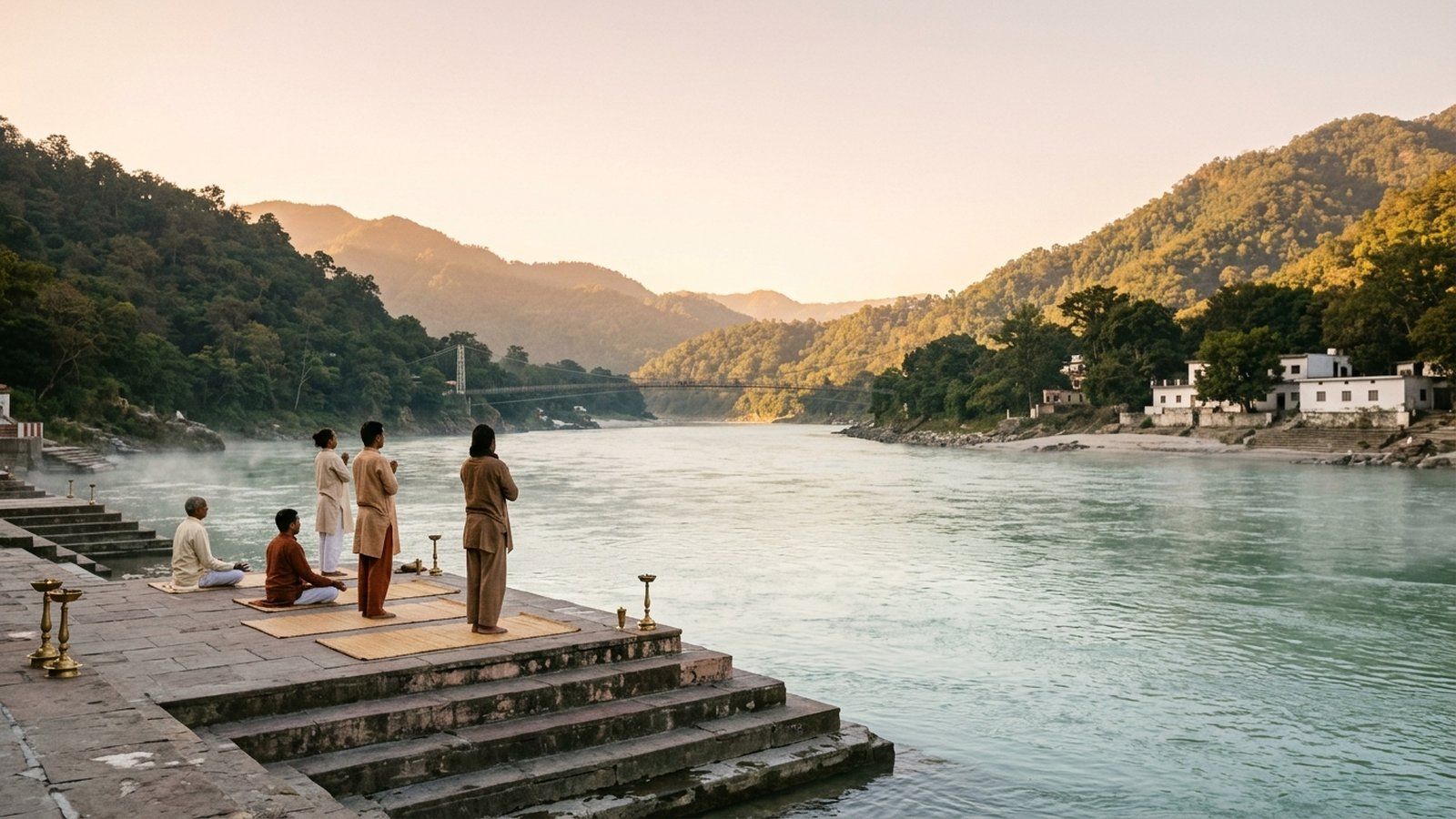
Rishikesh is a town on the Ganga, at the foot of the Himalaya in Uttarakhand, with more yoga ashrams, schools and teachers than almost anywhere in India. For a first visit, plan three to seven days, choose either an ashram stay or a small school with named teachers, and treat the cafe-lined lanes as scenery rather than as the practice.
Rishikesh is often called the yoga capital of the world. That title is popular rather than official, but it earns the reputation honestly: the town has been a centre for yoga and meditation teaching for decades, and an international festival now draws visitors from dozens of countries each year.
Why is Rishikesh associated with yoga?
The Ganga leaves the mountains here and enters the plains, and the area has been a place of pilgrimage and retreat for a very long time. In the twentieth century, several ashrams in and around the town became teaching centres for visitors. The best known to the outside world is the former ashram of Maharishi Mahesh Yogi, where the Beatles stayed in 1968. It is now popularly called the Beatles Ashram.
The International Yoga Festival, held each year in March at Parmarth Niketan, is the most visible event today. The organisers report participants from dozens of countries, and their 2018 edition included a walk to the Maharishi ashram to mark the Beatles’ stay there.
What are the main ways to practise in Rishikesh?
Ashrams. These are residential and follow a daily routine of yoga, meditation, chanting and often some work. Rooms are simple. Rules cover dress, alcohol, mobile phones and behaviour. They suit people who want immersion. Read our guide to ashram etiquette before you go.
Yoga schools and teacher trainings. Many schools offer month-long teacher training courses, as well as shorter programmes. Quality varies a lot. Ask for teacher names and training history, not just a brochure.
Drop-in classes. Studios and cafes offer single classes in Hatha, Vinyasa, Ashtanga and other styles. These are the easiest way to sample different teachers.
For help choosing between the three, see how to choose a yoga retreat in India.
What does a typical ashram day look like?
Exact timings differ from place to place, but a typical day looks like this:
- Early morning: wake-up, then pranayama and meditation, followed by an asana class.
- Mid-morning: breakfast, then free time or a lecture on yoga philosophy.
- Afternoon: a second class or a workshop, with rest in between.
- Evening: chanting, a satsang (a gathering for talks and discussion) or the Ganga aarti, the evening prayer ritual on the riverbank.
Many ashrams ask guests to share in some simple work, such as helping with meals or cleaning. This is called seva, or selfless service, and is treated as part of the practice.
When is the best time to go?
Rishikesh has a different character in each season. Winter mornings are cold, and spring, when the festival takes place, is generally comfortable. Summers in the plains are hot, and the monsoon from June to September brings heavy rain, which can affect travel on mountain roads. Check current conditions before you book. For wider seasonal advice, see our guide to Uttarakhand.
How do you avoid the tourist-trap version?
- Choose the teacher, not the photograph. The same lane has serious schools and shallow ones.
- Avoid “guaranteed” certificates. A certificate is only as good as the school’s reputation.
- Visit in person if you can. A day of drop-in classes before you commit to a month is time well spent.
- Ask about hidden costs. Meals, excursions and taxes can double the price of a cheap quote.
- Respect local rules. The core of the town is generally treated as a place where alcohol and non-vegetarian food are restricted. Follow what your host tells you.
What should you wear and how should you behave?
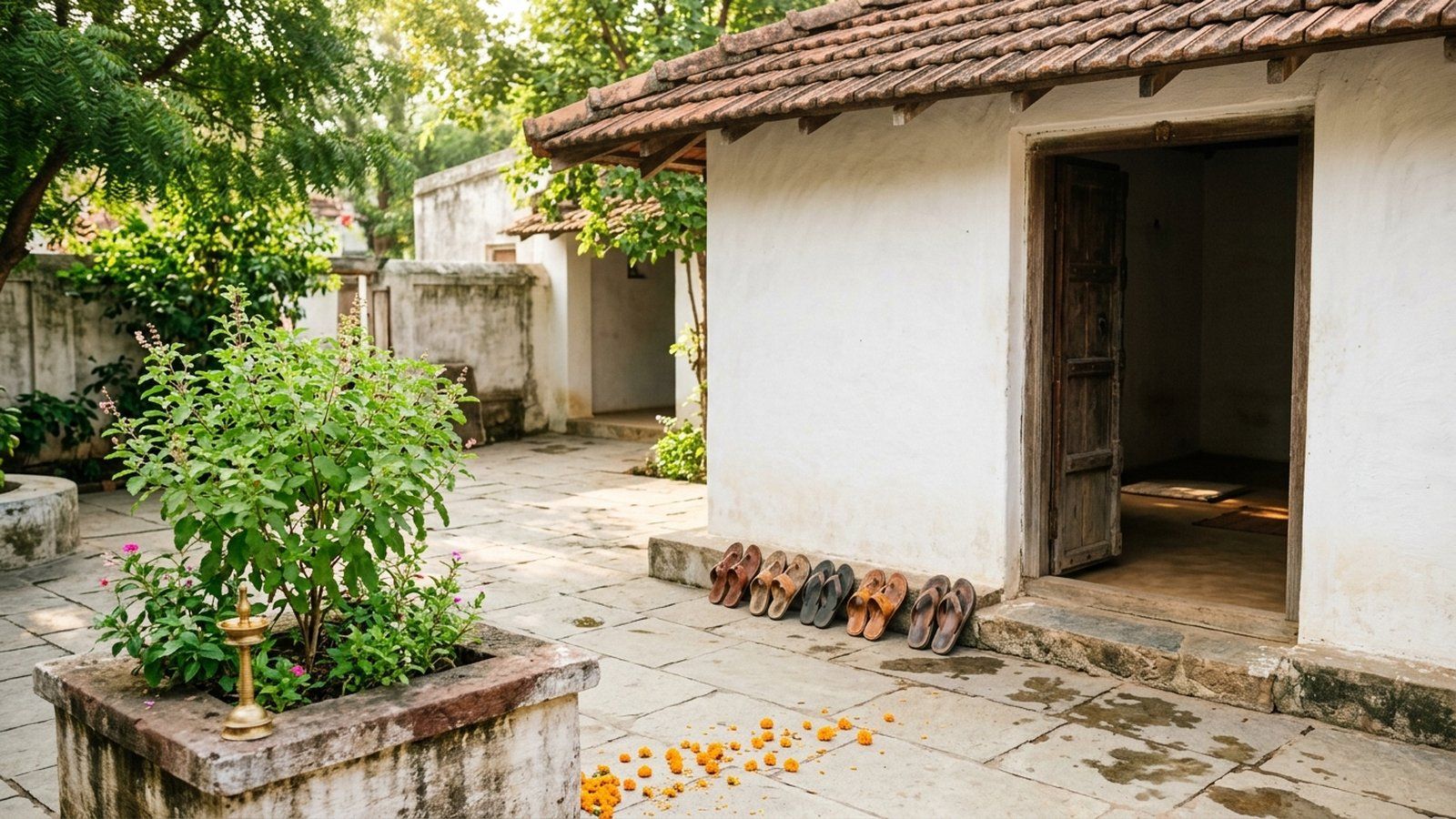
Dress modestly: shoulders and knees covered, loose clothes that are easy to practise in. Take off your shoes at ashram doors and in prayer halls. Ask before photographing people at prayer. Keep your voice low near the river at aarti time. If you bathe in the Ganga, follow the ghat’s rules and the advice of local people about currents, which can be strong.
How do you get there?
The nearest airport is Jolly Grant near Dehradun, and Haridwar, a short drive away, is the main railhead. Taxis and buses link both to Rishikesh. Confirm the route and timings before you travel, especially in monsoon, when landslides can disrupt roads.
What else is there to do?
The Ganga aarti in the evening is the most popular ritual, and the river bridges and ghats are worth a slow walk. You can also look at other places to meditate in India, and the long history behind the practice in our short history of yoga.
Questions readers ask
Is Rishikesh the yoga capital of the world?
It is often called that, and it has a long concentration of ashrams and yoga schools, but the title is popular rather than official. Mysuru, Pune and Munger are also important centres of yoga in India.
When is the International Yoga Festival held?
It is held every year in March at Parmarth Niketan in Rishikesh, according to the organisers. Check the festival website for current dates and registration.
Can I do yoga in Rishikesh without staying at an ashram?
Yes. Many schools and cafes offer drop-in classes, and many hotels and guesthouses partner with teachers. An ashram stay is a different experience, with a fixed routine and rules.
How many days do I need in Rishikesh?
Three to four days lets you try a few classes and see the Ganga aarti. A week or more is better if you want to settle into one teacher or one ashram.
Sources
Corrections
No corrections so far. If something is wrong, tell us below and we will fix it here with a dated note.
Help us get it right