Wellness · Field guide · 8 min read
Ashram Stay in India: Etiquette Rules and a Packing List
What is expected of guests at an Indian ashram, from dress and silence to seva and donations, and what to pack for a simple, early-rising week.
An ashram stay is a simple, structured way of living for a week or more, and guests are expected to follow the house rules: dress modestly, keep to the schedule, respect silence and sacred spaces, avoid alcohol, tobacco and (usually) meat, take part in seva if asked and treat teachers and residents with courtesy. Pack light, in loose cotton and warm layers.
Ashram rules are not arbitrary. They protect the quiet, the routine and the community of people who live there. Rules differ between places, so read the guest guidelines and treat what follows as a general guide.
What are the basic etiquette rules?
Dress modestly. Shoulders and knees covered, loose clothing, nothing see-through or tight. Many ashrams expect more modest dress in prayer halls and shrines.
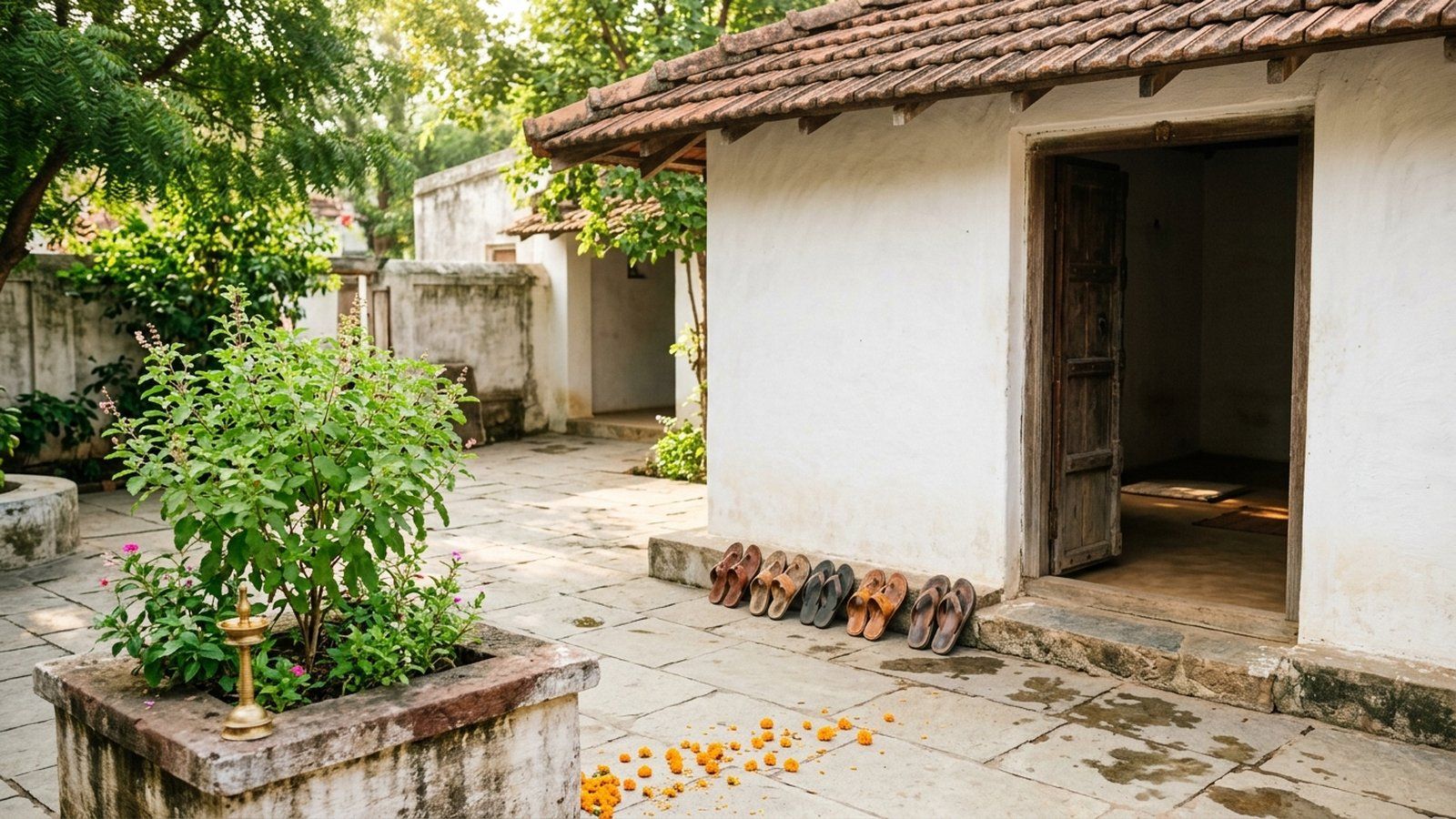
Remove your shoes at the door of halls, shrines and often rooms. Leave them neatly where shown.
Be on time. Programmes start and end on a fixed schedule. Arriving late disturbs others.
Respect silence. Many ashrams have silent areas and silent times. Keep your voice low in corridors and gardens, and keep phones on silent.
Ask before taking photographs, especially of people at prayer or of shrines, teachers and other guests.
Stay within the rules on food and substances. Alcohol, tobacco and non-vegetarian food are typically not allowed on the premises, and rules about leaving the premises and bringing in outside food vary.
Treat teachers and residents respectfully. Greet them politely, listen in lectures and do not interrupt.
Join in seva if it is part of the programme. It is as much a part of the practice as the postures.
Be thoughtful about donations. If the ashram works on donations, pay a fair amount for your room, food and teaching, not the minimum you can get away with.
What is a typical day?
Timings differ, but expect:
- an early start, often before sunrise, with meditation or pranayama
- an asana class and breakfast
- a lecture, work or study in the late morning
- lunch and rest
- a second class or session in the afternoon
- evening chanting, prayer or a talk, and an early night
For a place-specific example, see our guide to Rishikesh. For silent formats, read silent retreats in India.
What should you pack?
Clothes
- Two or three loose cotton tops and trousers or long skirts for practice
- A couple of modest outfits for the rest of the day
- Warm layers, a shawl or fleece and socks for early mornings and winter nights
- A light rain jacket in the monsoon
Practice
- A yoga mat, or ask whether the ashram provides them
- A small cushion or blanket for sitting
- A water bottle
Practical
- Slip-on shoes or sandals, which are easy to remove
- A towel, toiletries and a lock for your room or locker
- A torch or headlamp for early mornings
- Mosquito repellent and sun protection
- Any prescription medicines, with a copy of the prescription
- A notebook and pen if allowed
- Earplugs and an eye mask
Documents and money
- ID and your booking confirmation
- Cash in small notes for donations, tips and small purchases, since cards and phones may not work
Leave behind
- Revealing clothes, strong perfumes and valuables
- Alcohol, tobacco and meat
What are common mistakes?
- Arriving unprepared for the cold. Hill ashrams can be cold at dawn.
- Packing too much. Rooms are small, and carrying your bag is part of the stay.
- Treating it as a hotel. Services are simple, and the point is the practice.
- Not reading the rules. Ask about phone, food and curfew policies in advance.
- Doing too much on day one. Go gently into the schedule.
How do you choose an ashram?
Start with the tradition and the teachers you want, then check the schedule, the rules and the price. Our guide to choosing a yoga retreat in India has the questions to ask, and where to meditate in India lists places by tradition.
Questions readers ask
What should I wear at an ashram?
Loose, modest clothes that cover your shoulders and knees. Choose breathable cotton for yoga and warmer layers for early mornings. Many ashrams ask guests to wear plain, modest clothing in prayer halls.
Can I use my phone at an ashram?
Rules differ. Many ashrams ask guests to keep phones silent or out of sight in practice and prayer areas, and some limit use in common areas or ask you to hand them in. Read the guest rules before you arrive.
Do I have to pay for an ashram stay?
It depends. Some ashrams charge a fixed rate, and others ask for a donation in exchange for accommodation and food. Ask beforehand, and if the ashram works on donations, give generously and fairly.
What is seva?
Seva means selfless service. Many ashrams invite or expect guests to take part in simple work such as helping in the kitchen, garden or cleaning, as part of the practice.
Sources
Corrections
No corrections so far. If something is wrong, tell us below and we will fix it here with a dated note.
Help us get it right