Yoga · Field guide · 8 min read
How to Choose a Yoga Retreat in India
Ashram, studio retreat or teacher training? A practical guide to matching the setting, the teacher and the schedule to what you actually want.
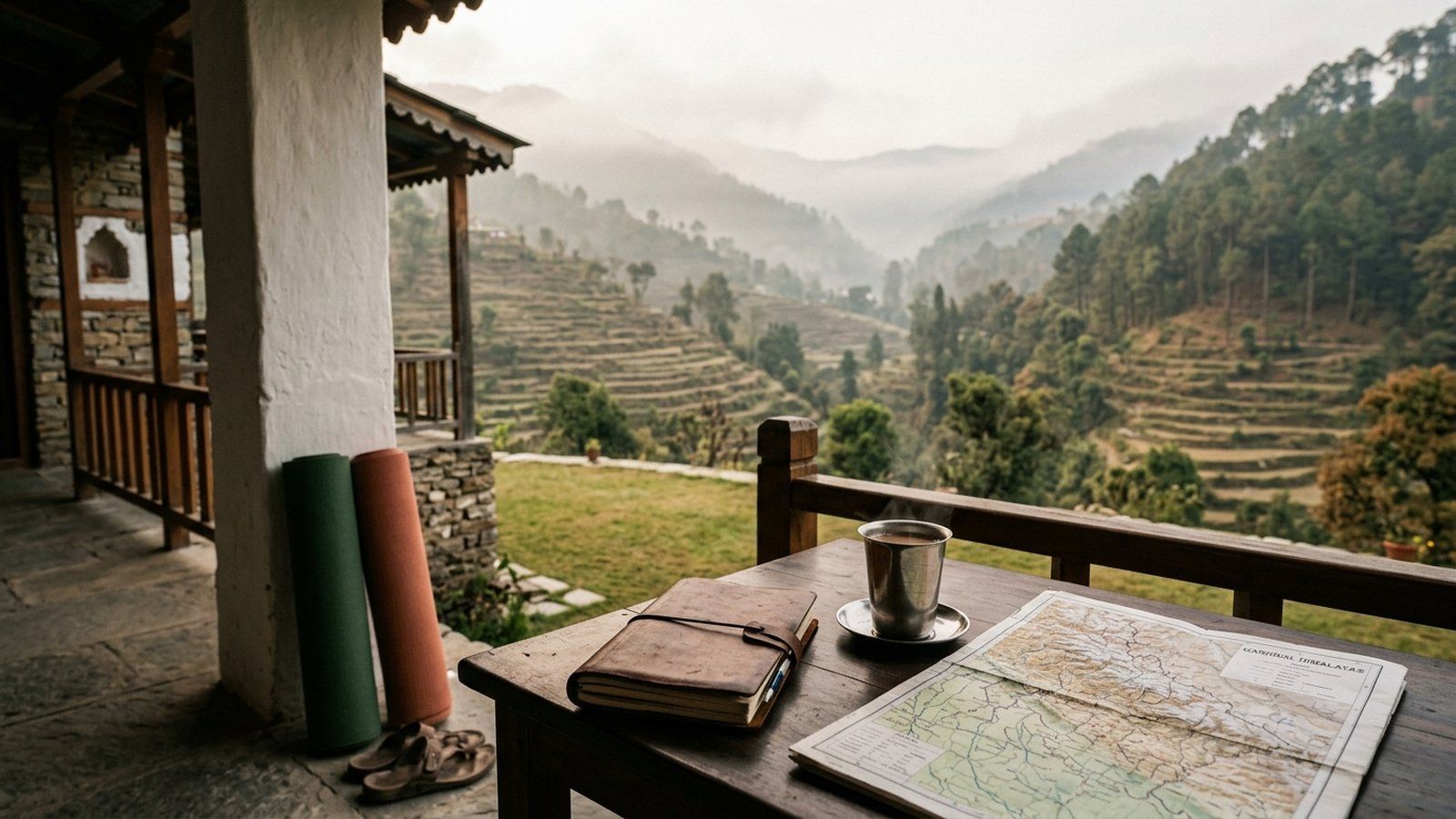
To choose a yoga retreat in India, decide three things in this order: the kind of stay (ashram, studio retreat or teacher training), the teacher and the tradition they teach in, and the daily schedule. Price comes last, because the cheapest and the most expensive options can both be right or wrong for you.
India has more ways to practise yoga than any other country, and that is the problem. A search for retreats returns thousands of listings with similar photographs. The questions below are the ones that separate them.
What are the main types of yoga retreat in India?
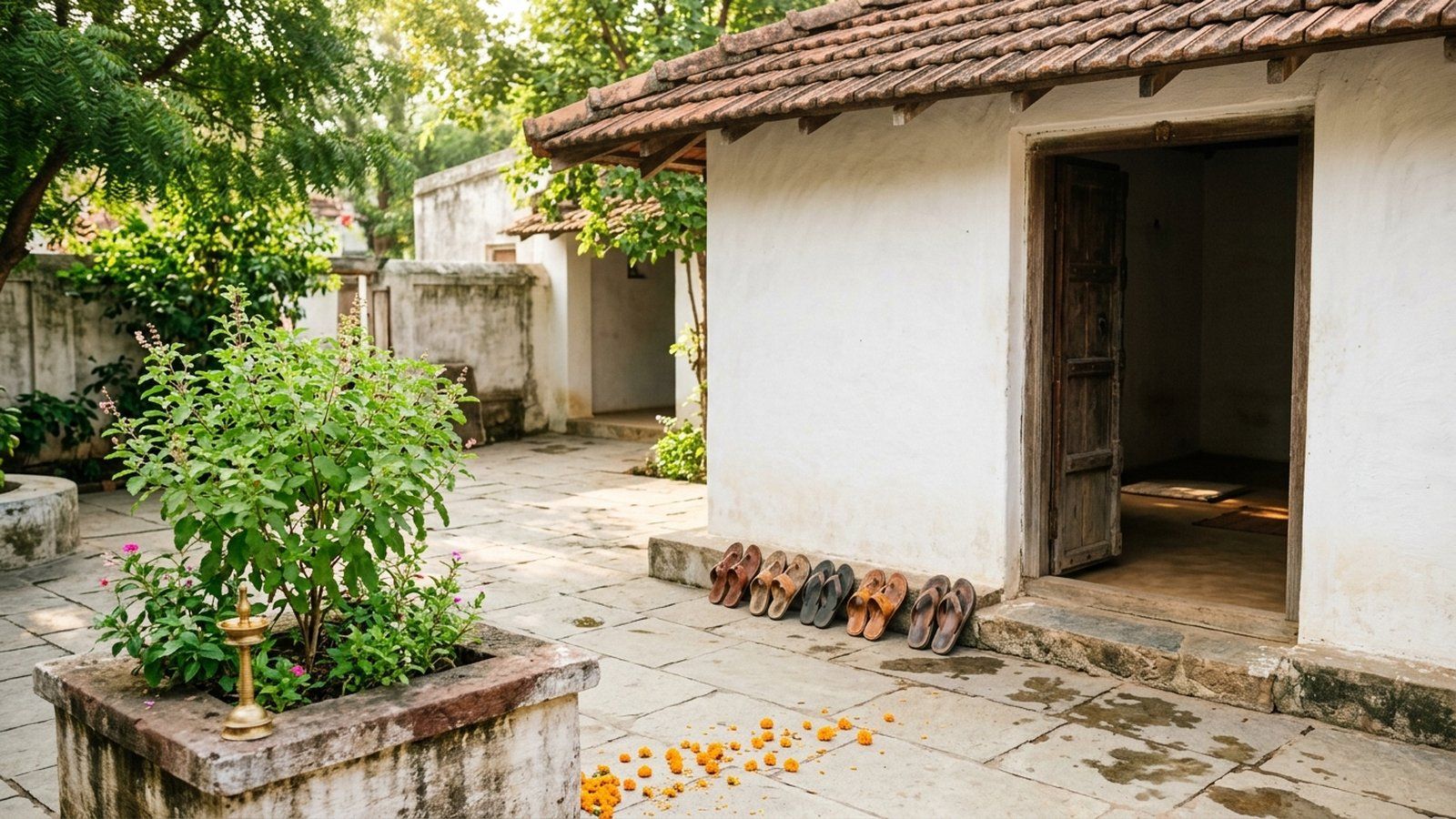
Ashrams. An ashram is a residential community with a fixed routine, often starting before dawn. Days usually mix asana and pranayama with meditation, chanting and some form of volunteer work called seva. Rooms are simple, food is vegetarian, and rules on alcohol, dress and phones are strict. Many run on donations or modest daily rates. The point is immersion, not comfort.
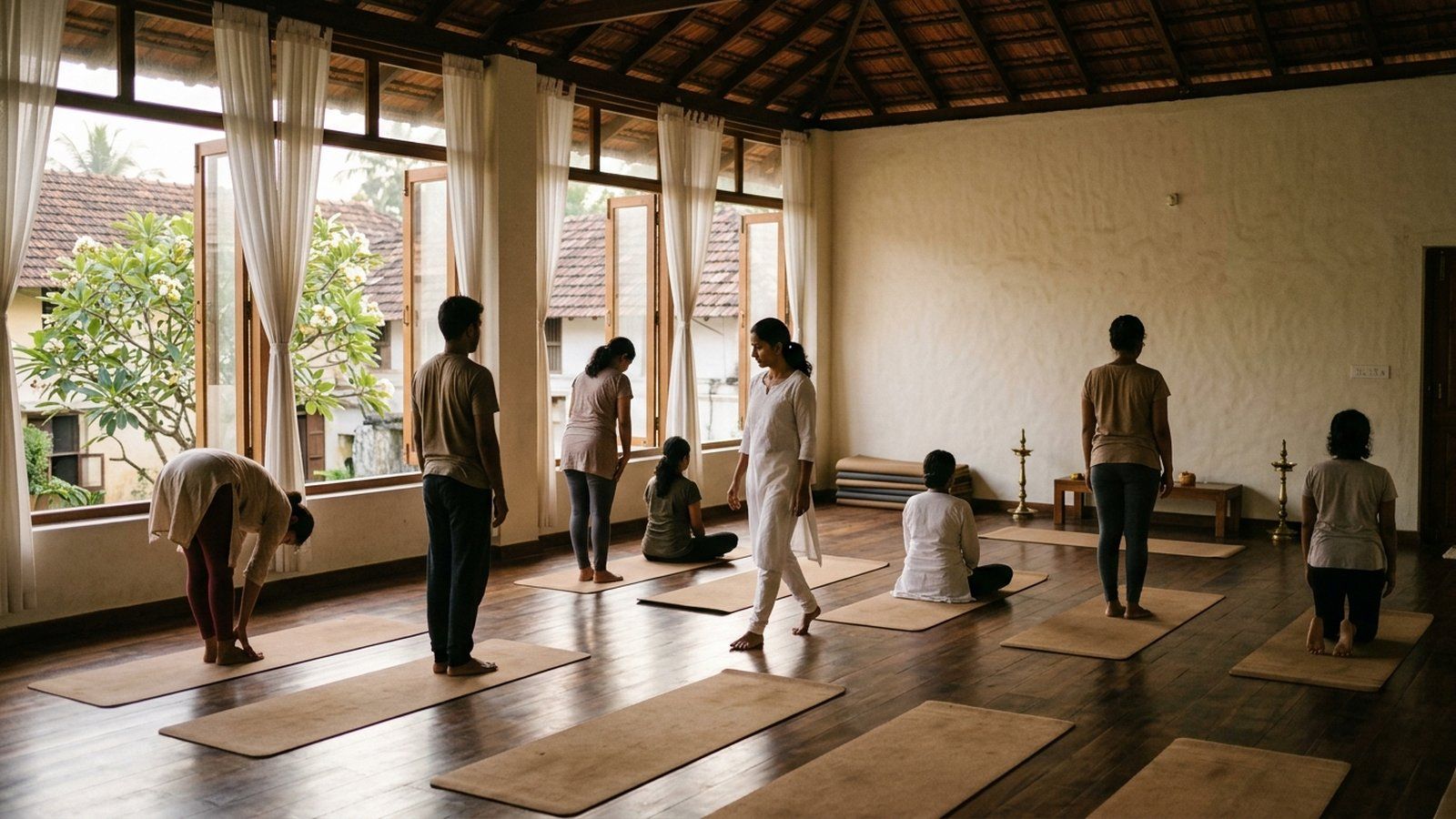
Studio and resort retreats. These are short, commercially run programmes, often three to seven days, in hotels, villas or purpose-built centres. They offer more comfort, a mix of styles and more free time. They suit people who want a gentle introduction or a holiday with yoga in it.
Teacher training courses. A 200-hour course is the usual entry-level qualification for teaching. It is a demanding month of study in anatomy, philosophy and teaching practice, not a holiday. It makes sense if you want to teach or to study in depth, and not otherwise.
Therapy-linked stays. In Kerala and a few other places, yoga is sold alongside Ayurvedic treatment. These have a medical side, covered separately in our guide to Ayurveda in Kerala.
Which type suits you?
- You are new to yoga and want to see if you like it: a studio retreat of three to five days, or a week at a beginner-friendly ashram.
- You want a reset from phones and noise: an ashram, or a silent course. See what to expect on a silent retreat.
- You already practise and want to go deeper into one tradition: a place built around that tradition, such as Ashtanga in Mysuru.
- You want to teach: a teacher training, after you have attended regular classes for at least a year.
What should you ask before booking?
Write to the organiser and ask for plain answers. A good retreat replies clearly and quickly.
- Who teaches, and in which tradition? You want names, a short biography and a lineage or training history, not just “experienced teachers”.
- What does a typical day look like, hour by hour? Check the wake-up time, the number of practice hours and the free time.
- What level is it for, and who is it not for? Honest organisers say who should not come.
- How large are the groups? Ten to fifteen students gets you attention. Fifty does not.
- What is included? Meals, airport pickup, excursions, towels and taxes are the usual surprises.
- What is the cancellation and refund policy? Read it before you pay.
- How do they handle injuries and medical conditions? There should be a health form and a teacher who reads it.
What does the research say about yoga?
Yoga is one of the better-studied practices for chronic low back pain. The Cochrane Collaboration, which reviews trial evidence, updated its review in 2022. It concluded that yoga may reduce back pain symptoms by a small amount compared with no specific treatment, from studies with short follow-up, and that there was little or no difference between yoga and other back-focused exercise at three and six months. The earlier 2017 version covered 12 trials with 1,080 participants and noted that about 5 per cent more yoga participants reported increased back pain than comparison groups.
The practical reading is modest. Yoga is a reasonable form of exercise, and it works about as well as other sensible exercise. Choose the retreat you will enjoy and be able to keep doing at home, not the one with the biggest promises.
What are the red flags?
- Promises of cures. No retreat can cure serious illness. Walk away from one that claims to.
- No named teachers, or teachers who cannot say who trained them.
- No health form, or no one who reads it.
- Pressure to buy. High-pressure sales of treatments, supplements or extra courses once you arrive.
- Extreme fasting or “detox” programmes with no medical supervision.
- Aggressive physical adjustments or teachers who dismiss pain as “resistance”.
- No refund policy or a policy that changes after you have paid.
When should you go?
Pick the season by the place. The hills are cold in winter and wet in the monsoon, the plains are hot from April, and the south is warm all year but wetter from June to September. Our guides to Rishikesh and Mysuru cover the seasons for each.
The short version
Decide between ashram, retreat and training. Choose a named teacher in a named tradition. Ask for the daily schedule. Check the refund policy. Walk away from cure claims. A good first retreat is a week long, in a place you can reach easily, and gives you tools you can use at home.
Yoga was added to UNESCO’s Representative List of the Intangible Cultural Heritage of Humanity in 2016, and the history behind it is worth knowing before you go. Start with a short history of yoga.
Questions readers ask
Do I need yoga experience to join a retreat in India?
Most ashrams and retreats accept beginners, but formats differ. A teacher training or an Ashtanga programme usually expects some regular practice, so read the stated level and write to ask if it is unclear.
What is the difference between an ashram and a yoga retreat?
An ashram is a residential community with a fixed daily routine that often includes chanting, meditation and volunteer work alongside yoga. A retreat is usually a short, commercially run programme with more comfort and more flexibility.
Do I need a 200-hour teacher training to learn yoga properly?
No. A teacher training is for people who want to teach or to study in depth. For personal practice, a week at an ashram or regular classes with a good teacher is enough.
How long should a first yoga retreat be?
A week is a common first step because it is long enough to settle into a routine and short enough to leave if it is not for you. Check the cancellation terms before you commit to anything longer.
Sources
Corrections
No corrections so far. If something is wrong, tell us below and we will fix it here with a dated note.
Help us get it right