Meditation · Places · 9 min read
Where to Meditate in India: Eight Places, by Tradition
Bodh Gaya, Igatpuri, Dharamshala, Rishikesh and four more places, grouped by tradition, with what each is known for and who it suits.
The best place to meditate in India depends on the tradition you want to learn. Igatpuri in Maharashtra is the home of a large Goenka-tradition Vipassana centre, Bodh Gaya and Sarnath are the great Buddhist pilgrimage sites, Dharamshala and Bylakuppe are centres of Tibetan Buddhism, Rishikesh and Munger are known for yoga, and Auroville has a space built for silent concentration.
India is the source of many of the world’s meditation traditions, and most are still practised and taught where they began. The eight places below are grouped by tradition. All of them have more going on than we can cover here, so treat this as a starting map, and confirm current details with each place.
Buddhist traditions
1. Bodh Gaya, Bihar
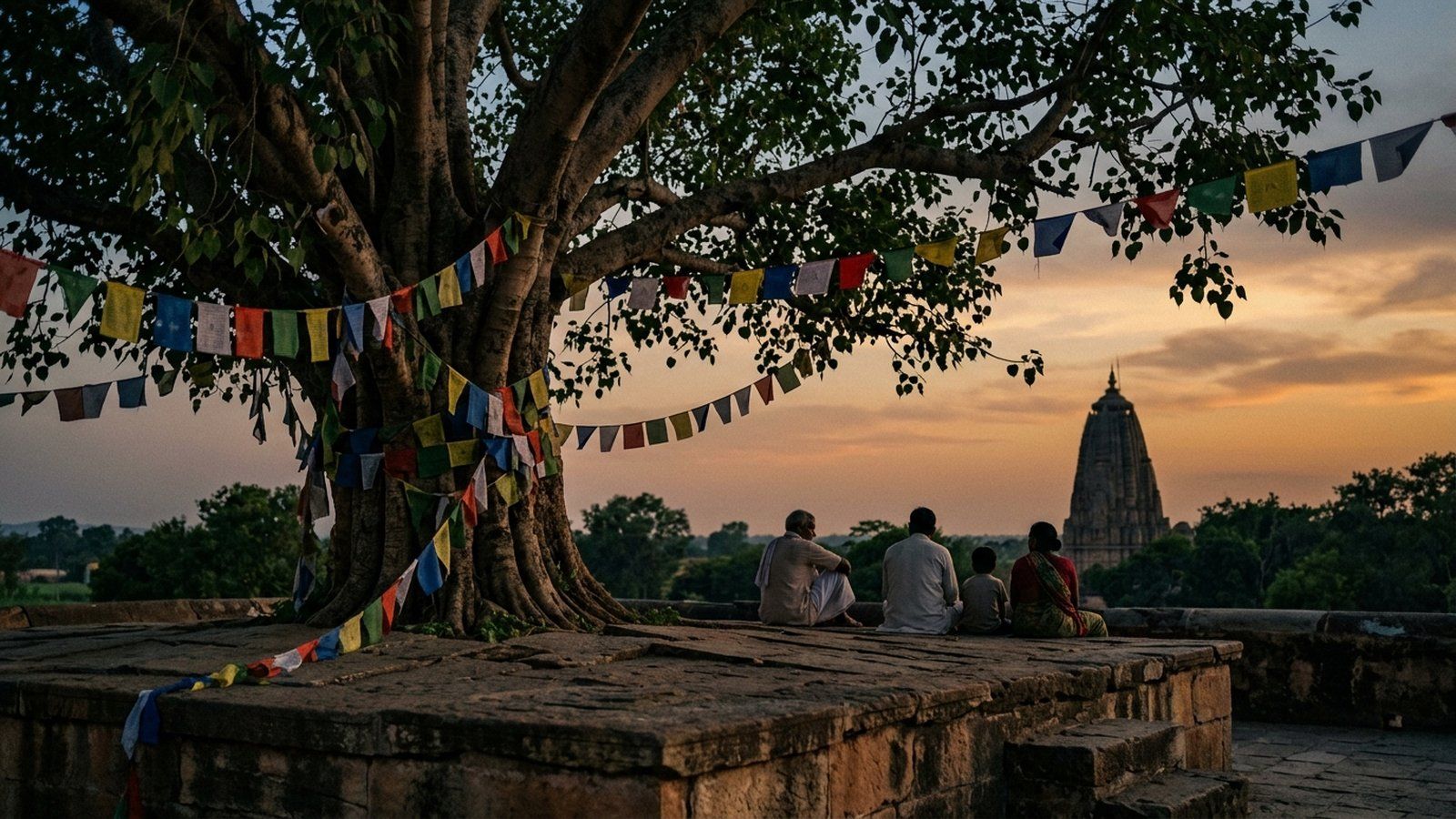
Bodh Gaya is where, in Buddhist tradition, the Buddha attained enlightenment. The Mahabodhi Temple Complex was inscribed on the UNESCO World Heritage List in 2002. Monasteries built by Buddhist communities from many countries surround the temple, and many pilgrims and visitors sit in quiet meditation near the Bodhi tree. Some monasteries and meditation centres offer courses. It suits visitors who want the atmosphere of a living pilgrimage site more than a structured programme. Winters are the usual season.
2. Sarnath, Uttar Pradesh
Sarnath, near Varanasi, is the place where the Buddha is said to have given his first teaching. Ruins, a museum and modern temples make it a calm half-day or full-day visit. It suits people who want to understand the roots of Buddhism and pair it with a visit to Varanasi.
3. Dharamshala and McLeod Ganj, Himachal Pradesh
Dharamshala is home to a large Tibetan community, and McLeod Ganj is the seat of the Dalai Lama’s government in exile. The area has Tibetan Buddhist monasteries and meditation centres offering introductory courses and longer retreats, and a Vipassana centre in the Goenka tradition is also nearby. It suits people interested in Tibetan Buddhism, who can tolerate cold winters and a rainy monsoon.
4. Bylakuppe, Karnataka
Bylakuppe, near Mysuru, has one of the largest Tibetan settlements in India, with large monasteries including Namdroling, known for its golden temple. Visitors can walk through the settlement, attend prayers and learn about Tibetan Buddhist practice. It suits travellers who want a quieter, more rural introduction than Dharamshala, and pairs well with a visit to Mysuru.
Vipassana
5. Igatpuri, Maharashtra
Dhamma Giri at Igatpuri, which opened in 1976, is one of the largest Vipassana centres taught in S.N. Goenka’s tradition, with a Vipassana research institute alongside it. It runs the standard 10-day courses and other formats, free of charge, funded by donations. Igatpuri is a hill town in the Western Ghats within reach of Mumbai and Nashik. Apply well ahead. See what is Vipassana before you commit.
Yoga traditions
6. Rishikesh, Uttarakhand
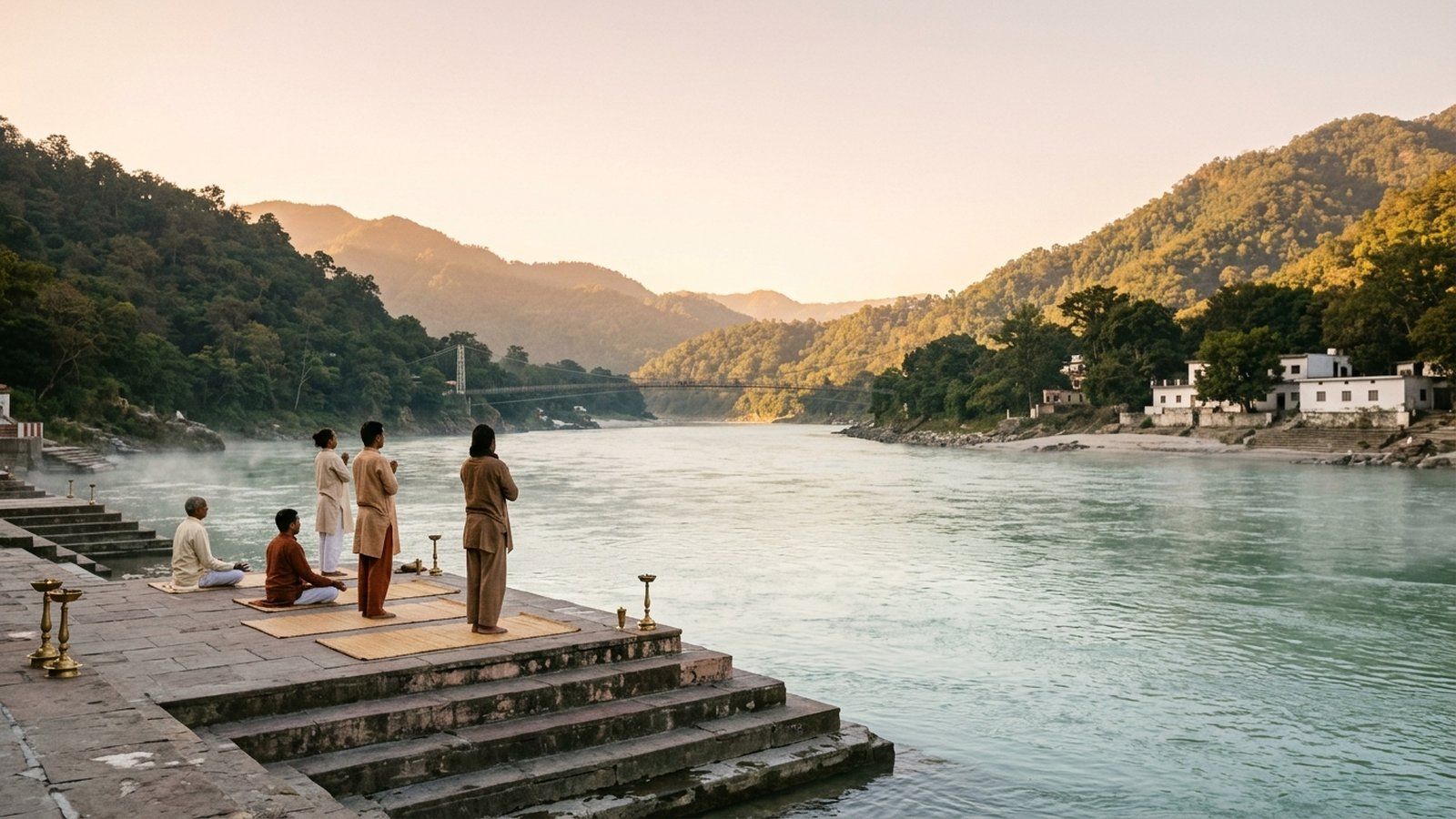
Rishikesh, on the Ganga, has many ashrams and schools that combine yoga, pranayama and meditation, and hosts the International Yoga Festival each March. It suits people who want yoga and meditation together and are comfortable with an ashram routine. See our Rishikesh guide and ashram etiquette.
7. Munger, Bihar
Munger is home to the Bihar School of Yoga, founded in 1964 by Swami Satyananda Saraswati, a tradition known for yoga nidra, a guided deep-relaxation practice, and for a broad, integrated approach to yoga. It is less visited than Rishikesh and suits serious students who prefer a quiet, traditional setting. Contact the school for course details.
A place built for silence
8. Auroville, Tamil Nadu
Auroville is an international township near Puducherry. Its Matrimandir, a large golden sphere, houses an inner chamber designed for silent concentration. Access to the chamber is by booking, and visitors follow strict rules about silence and conduct. It suits people who want a non-denominational space to sit, and it is open to visitors of any faith or none.
How should you choose?
- Start with the tradition you are curious about, not with the place.
- Match the length to your experience. A day at Sarnath or Bodh Gaya, a short course at Dharamshala or a week at an ashram are all gentler than ten silent days.
- Check the season. Dharamshala and Rishikesh are cold in winter, the plains are hot from April, and the monsoon affects hill roads.
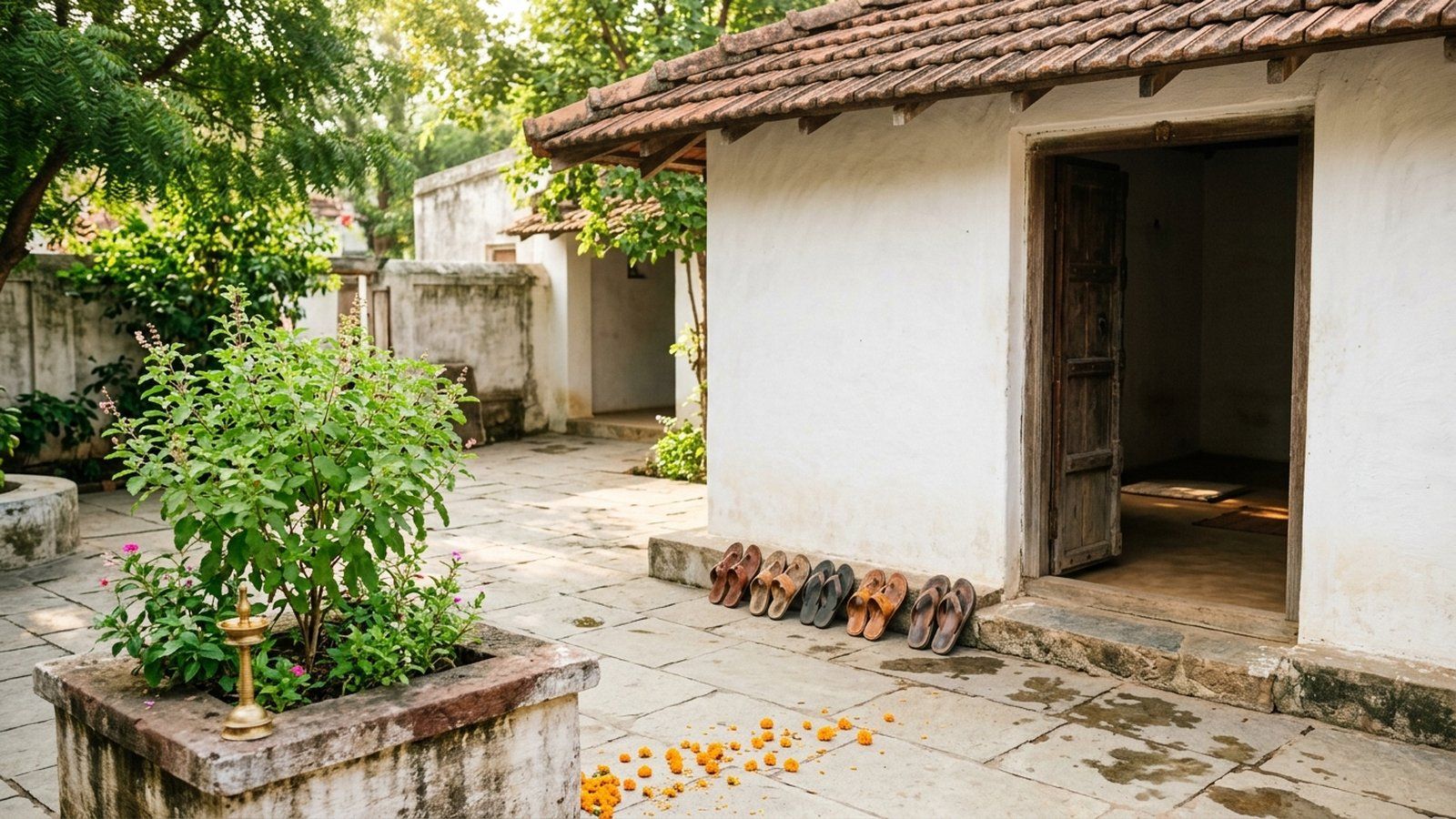
- Respect local custom. Dress modestly, remove shoes where asked and ask before photographing people at prayer.
- Book early for courses and centres with application processes.
If you are not sure where to begin, types of meditation compared explains the main approaches, and silent retreats in India covers preparation.
Questions readers ask
Where is the best place in India to learn meditation?
It depends on the tradition. Igatpuri for Goenka-tradition Vipassana, Bodh Gaya and Dharamshala for Buddhist teaching, and Rishikesh or Munger for yoga-based meditation. Start with the tradition you want to learn and then choose the place.
Do I need to book in advance?
For structured courses, yes. Vipassana centres fill quickly and require an application. For visiting temples or monasteries, you can usually walk in, but ask about dress and photography rules.
Can I meditate at these places without a course?
Many holy sites welcome quiet visitors, and you can sit in designated areas. A course or a teacher is a better way to learn, and some places have rules about where and when you can sit.
Which place suits beginners?
Short courses at centres that welcome beginners, such as introductory programmes in Dharamshala or yoga ashrams in Rishikesh, are easier first steps than a ten-day silent retreat.
Sources
Corrections
No corrections so far. If something is wrong, tell us below and we will fix it here with a dated note.
Help us get it right