Wellness · Kerala · 9 min read
Ayurveda in Kerala: What to Ask Before You Book a Panchakarma Stay
How Kerala's Ayurveda stays work, what Panchakarma involves, how the state classifies centres and the questions that separate good clinics from spa-style packages.
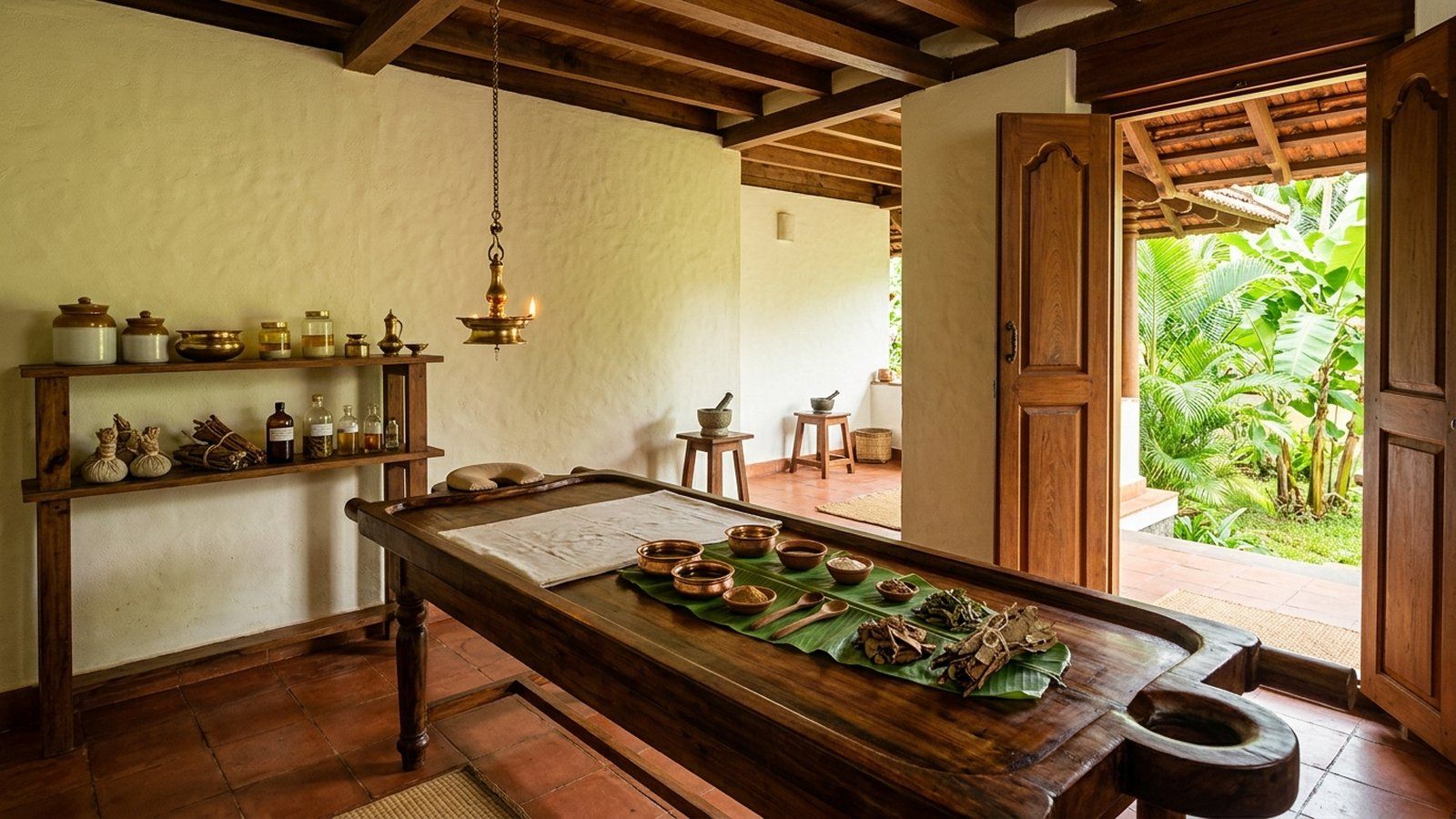
Kerala is India’s best-known destination for Ayurveda stays, and the choice of centre matters more than the choice of package. Look for a qualified Ayurvedic physician who takes a medical history, a centre classified by Kerala Tourism, clear prices and no promises of cures. A full Panchakarma programme usually runs from about one to three weeks, and a few days of massage is closer to a spa than to treatment.
Ayurveda is a traditional system of medicine from India, and Kerala has built a tourism industry around it. The result is a very wide range: serious clinics run by physicians, and resorts selling massage packages with an Ayurveda label. This guide helps you tell them apart.
What is Panchakarma?
Panchakarma means “five actions”. In classical Ayurveda it refers to cleansing procedures: therapeutic vomiting, purgation, medicated enemas, nasal treatments and bloodletting. In practice, many Kerala centres offer a modified programme built around:
- a consultation with an Ayurvedic physician
- a prescribed diet
- oil massage (abhyanga), steam and other external treatments
- internal medicines, sometimes including purgation
- rest
The full classical procedures are strong treatments and should only be done under a qualified physician’s supervision.
How does Kerala classify Ayurveda centres?
Kerala Tourism says it grades Ayurveda centres on the quality of technical personnel, medicines, health programmes and equipment, and promotes only centres it has classified or approved. For years the labels were Green Leaf and Olive Leaf. The department’s current classification page describes a revised scheme, sanctioned in 2019, with three categories: Ayur Silver, Ayur Gold and Ayur Diamond, in rising order. Some listings still carry the older names.
Because the labels and their meaning have changed, don’t rely on a label alone. Check the centre on Kerala Tourism’s website, and ask the centre which tier it holds.
What should you ask before booking?
- Who is the doctor? You want an Ayurvedic physician with a recognised degree, usually a BAMS, who sees you before treatment and reviews you during it.
- Do they take a medical history? A genuine clinic asks about your health, medicines and conditions, and may decline treatment.
- What exactly is in the programme? Ask for the list of treatments, the number of days and the daily schedule.
- What does it cost in total? Ask about doctor’s fees, medicines, accommodation, meals and taxes.
- What about my medicines? Tell them about everything you take, and ask how Ayurvedic treatment interacts.
- Where do the medicines come from? Ask who makes them and whether they are tested.
- What happens if I feel unwell? There should be an arrangement with a hospital.
Which season is best?
Kerala’s monsoon, from June to September, is traditionally associated with rejuvenation therapy, and some centres market monsoon programmes. The weather is wet, and the pace is slow. Many visitors prefer the drier season. Either way, book a stay long enough to be worth the travel. See our guide to Kerala.
What are the red flags?
- Cure claims for serious or chronic disease.
- No consultation, or a consultation that is a sales pitch.
- Pressure to buy medicines or expensive extensions.
- Unqualified staff giving medical advice.
- No price list.
- Extreme fasting or purgation without medical supervision.
Are Ayurvedic medicines safe?
Many are used safely every day, but quality varies. A 2008 study in JAMA bought 193 Ayurvedic medicines from websites, from both US and Indian manufacturers, and tested them. About 20.7% contained detectable lead, mercury or arsenic. The study looked at products sold online, not treatment at a clinic, and its authors did not say all Ayurvedic medicine is unsafe. The lesson for travellers is to buy from reputable sources, to ask a centre how it sources and tests its medicines, and to be cautious about buying preparations from unknown sellers online.
How does Ayurveda fit with yoga?
Many Kerala stays combine the two, with morning yoga and meditation alongside treatment. If yoga is your main interest, read how to choose a yoga retreat in India. For a wider look at the business, see India’s wellness travel boom.
Questions readers ask
What is Panchakarma?
Panchakarma means five actions. It refers to a set of cleansing and detoxifying procedures in Ayurveda, traditionally including therapeutic vomiting, purgation, medicated enemas, nasal treatments and bloodletting. Many centres offer milder versions built around oil massage, steam and diet.
How long does an Ayurveda programme last?
Programmes range from a few days of massage-based treatment to three weeks or more for a full Panchakarma course. Longer stays are generally recommended for treatment, shorter ones are more like spa packages.
Does Kerala Tourism regulate Ayurveda centres?
The Department of Tourism classifies Ayurveda centres based on factors such as the technical personnel, medicines, health programmes and equipment, and promotes only classified or approved centres. The classification scheme has been revised, so check the current tier on the department's website.
Are Ayurvedic medicines safe?
Many are used safely, but quality varies. A well-known 2008 study found that about one in five Ayurvedic products bought online contained detectable lead, mercury or arsenic. Buy from reputable sources and ask a centre about how it sources and tests its medicines.
Sources
Corrections
No corrections so far. If something is wrong, tell us below and we will fix it here with a dated note.
Help us get it right