Wellness · Explainer · 8 min read
Mental Health and Retreats: What a Week Away Can and Cannot Do
About one in ten Indian adults had a mental disorder in the national survey, and most were untreated. What yoga and meditation retreats can offer, and where they stop.
A retreat can lower stress, teach you tools such as meditation and breathing, and give you a break from routine, but it is not a treatment for mental illness. The National Mental Health Survey found that about 10.6% of Indian adults had a current mental disorder, and that most of those with a disorder were not getting treatment. If you have persistent symptoms, a professional assessment comes first, and a retreat can be an addition.
10.6%
of adults had a current mental disorder in the national survey
13.67% over a lifetime
70–92%
treatment gap, depending on the disorder
People who needed care and did not get it
12
states covered by the survey
NIMHANS, 2015-16
More people are turning to yoga, meditation and wellness travel for stress, anxiety and low mood, and the marketing often promises more than the evidence supports. This guide is about the difference.
How common are mental health conditions in India?
The National Mental Health Survey of India, carried out in 2015 and 2016 by the National Institute of Mental Health and Neurosciences (NIMHANS) for the Ministry of Health, covered 12 states. It found that about 10.6% of adults had a current mental disorder and about 13.67 per cent had had one at some point in their lives. It also found a large treatment gap: roughly 70 to 92 per cent of people with a disorder did not receive treatment, depending on the condition.
We have quoted the prevalence figure as reported in the survey’s full report and academic summaries, which round it slightly differently (10.5 or 10.56 per cent). The treatment-gap range is from secondary summaries of the survey. Check the official summary report for exact figures.
What do retreats offer?
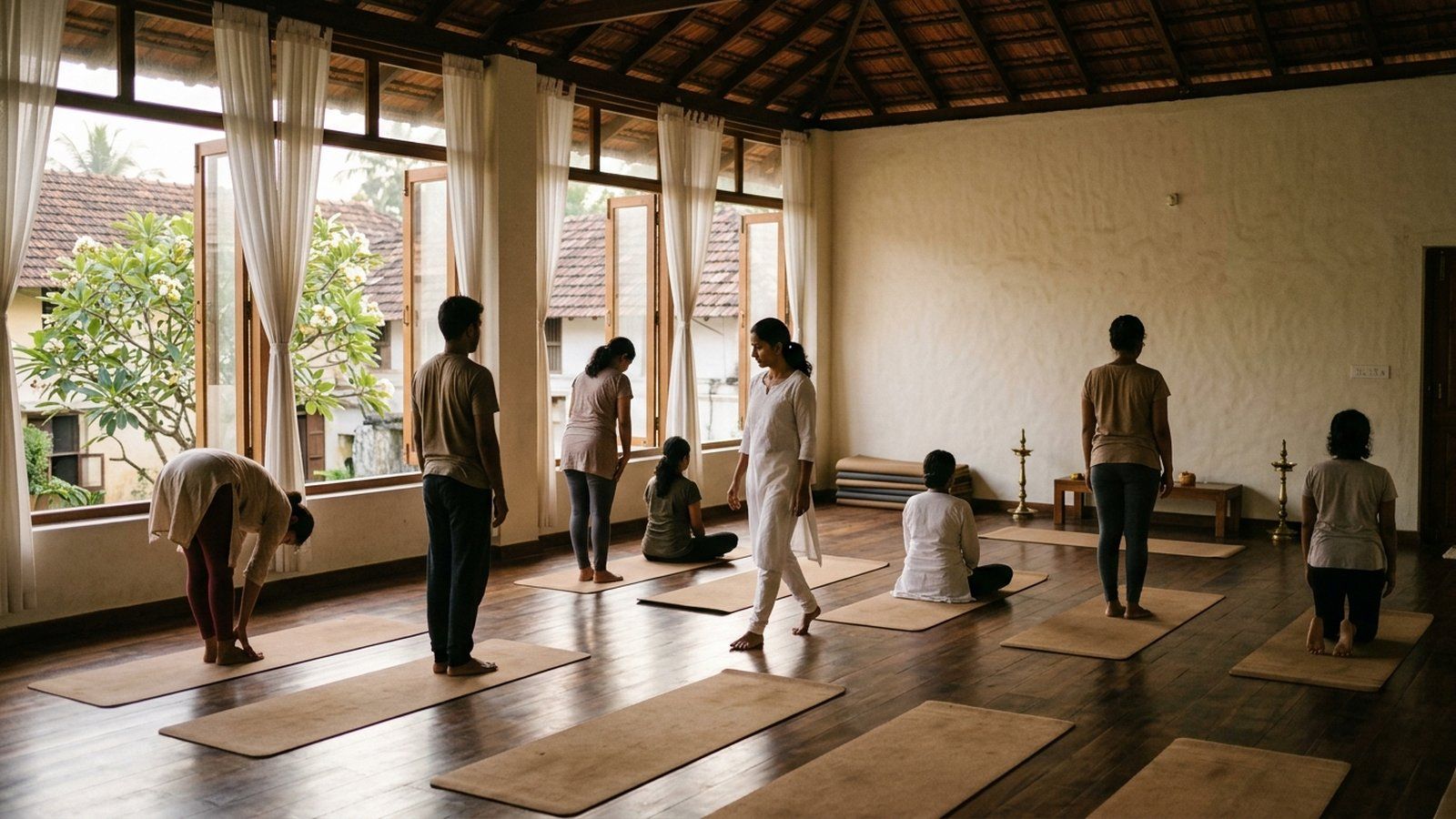
- A break. Time away from work, screens and routine can lower stress for many people.
- Skills. Meditation, breathing and gentle movement can be practised at home.
- Structure. A retreat’s routine can help people who struggle to build habits.
- Company. Being with others on a similar path can be supportive.
What does the research say?
The strongest research is on structured mindfulness programmes, not retreats. A review of 47 randomised trials in JAMA Internal Medicine found moderate evidence that meditation programmes bring small to moderate improvements in anxiety, depression and pain, and no evidence that they work better than other active treatments. See what the research says. Put simply, meditation is a reasonable thing to add alongside care and is not a replacement for it.
What can retreats not do?
- Diagnose or treat a mental illness. Most retreat staff are not clinicians.
- Replace medication or therapy that a doctor has prescribed. Do not stop treatment without advice.
- Manage a crisis. Remote centres may be hours from a hospital, and phones are often handed in.
- Guarantee safety. Intensive practice can bring up strong feelings, and for some people it makes symptoms worse.
Who should talk to a professional first?
If you have a history of serious mental illness, severe depression or anxiety, panic attacks, significant trauma, or a recent bereavement or crisis, speak to a doctor or therapist before you book. Tell the retreat about it as well. Read silent retreats in India and what is Vipassana for what the most intensive formats involve.
What should you ask a retreat?
- Do you take a health history, and what happens if someone is struggling?
- Who is on site, and what are their qualifications?
- How far is the nearest hospital, and what is the emergency plan?
- Can I keep my phone for emergencies, or arrange a contact?
- What is your cancellation and refund policy if I decide to leave?
Where to get help in India
- A doctor, psychiatrist or clinical psychologist is the first step for persistent symptoms.
- Tele-MANAS is the government’s free mental health helpline, on 14416 or 1-800-891-4416. Check the Ministry of Health’s website for current languages and availability.
- In an emergency, go to the nearest hospital or call the emergency services.
Questions readers ask
Can a yoga or meditation retreat cure depression or anxiety?
No. A retreat can reduce stress and give you tools, and research on meditation shows modest benefits for anxiety and depression, but it is not a treatment for a mental illness. Persistent symptoms need a professional assessment.
Should I tell a retreat about my mental health history?
Yes, if the form asks and in any case if you have a history of serious mental illness or trauma. Good centres ask because intensive practice can be difficult for some people, and honest answers help them support you or advise you not to attend.
How common are mental health conditions in India?
The National Mental Health Survey of India (2015-16), carried out by NIMHANS across 12 states, found a current prevalence of about 10.6 per cent among adults, with a treatment gap that varied by disorder from roughly 70 to 92 per cent.
Where can I get help in India?
Speak to a doctor, a psychiatrist or a clinical psychologist. For free support, Tele-MANAS is a government helpline on 14416 or 1-800-891-4416. Check the Ministry of Health's website for current services and languages.
Sources
Corrections
No corrections so far. If something is wrong, tell us below and we will fix it here with a dated note.
Help us get it right