Meditation · Explainer · 9 min read
What Is Vipassana? The 10-Day Course, Explained
What Vipassana means, how the standard 10-day silent course is structured day by day, and who it suits.
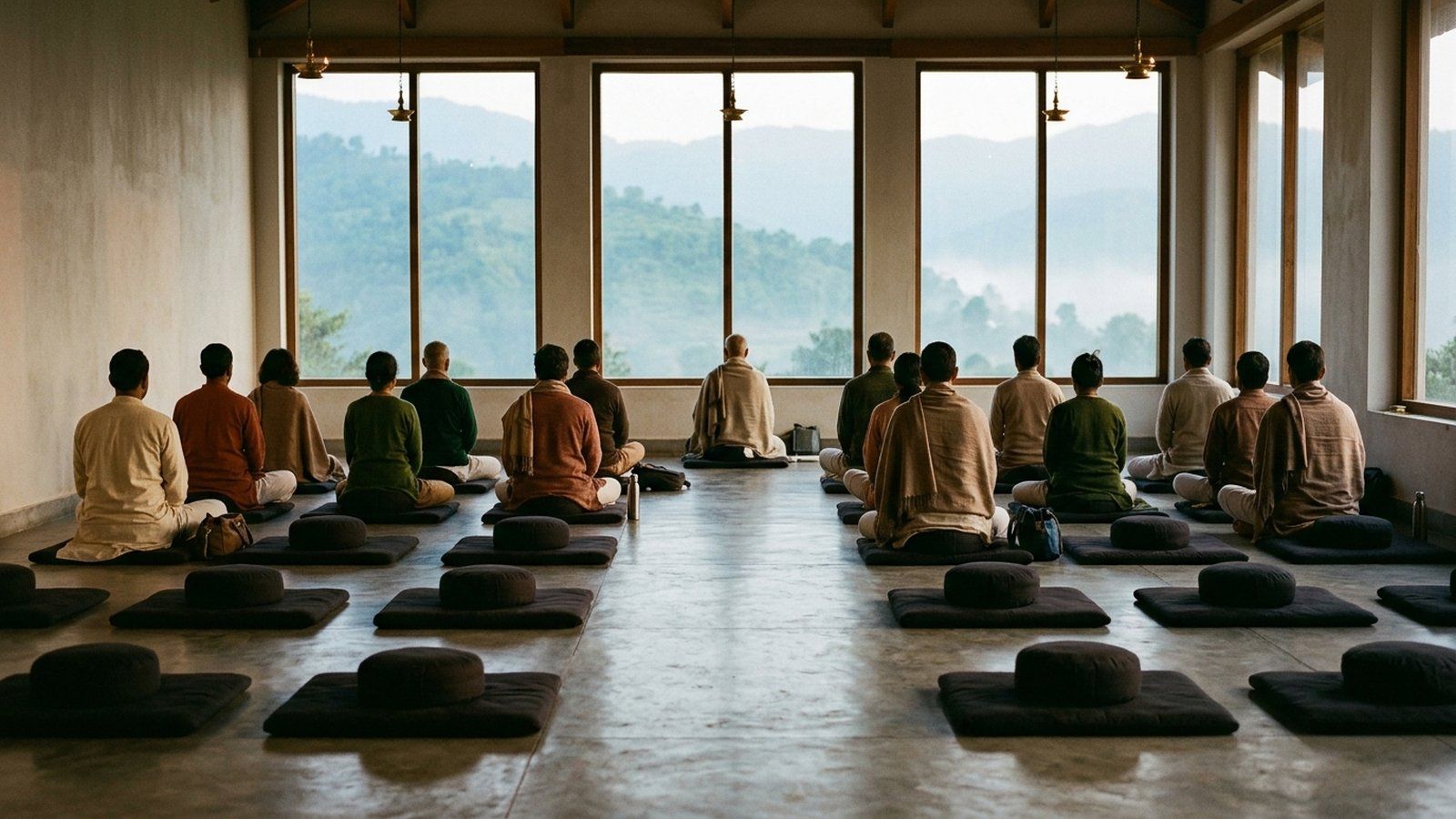
Vipassana means insight in Pali, and the course most people mean when they say it is a 10-day silent retreat taught in the tradition of S.N. Goenka. You observe your breath and then bodily sensations for about 10 hours a day, in noble silence, with no phone, reading or writing, and you pay nothing for the course itself.
It is the best-known meditation retreat in India, and one of the most demanding. The structure below follows the standard timetable published by centres teaching in Goenka’s tradition. Individual centres vary slightly, so read the schedule of the one you apply to.
10
days, from the afternoon of arrival to the morning of day 11
about 7:30 a.m. on day 11
10 hours
of meditation a day, between breaks and rest
4:00 a.m. to 9:00 p.m.
9
full days of noble silence
Speech resumes on day ten
What does Vipassana mean?
Vipassana is a Pali word often translated as insight, or seeing things as they really are. It names a Buddhist approach to meditation that focuses on observing experience, including breath, bodily sensation and thought, without reacting to it. Several Buddhist traditions teach Vipassana in different ways. The course discussed here follows the tradition taught by S.N. Goenka, who learned it from Sayagyi U Ba Khin in Myanmar and taught it widely in India and abroad.
What happens on a 10-day course?
You arrive in the afternoon, register, hand over your phone and valuables and take the five precepts that apply for the duration of the course: no killing, stealing, sexual activity, lying or intoxicants. Noble silence begins that evening.
- Days one to three: you practise Anapana, watching the natural breath at the nostrils, to sharpen attention.
- Day four: the teacher introduces Vipassana itself, a systematic observation of sensations through the body.
- Days five to nine: you deepen the practice, with longer, more disciplined sittings.
- Day ten: noble silence ends, and you practise loving-kindness meditation, called metta.
- Day eleven: you finish around 7:30 in the morning.
What does a day look like?
The day starts with a bell at 4:00 a.m. and runs to 9:00 p.m.. There are about 10 hours of meditation, in group sittings in the hall and in your room, with meals and rest breaks. At 7:00 p.m. each evening, a recorded discourse by Goenka explains the day’s experience. Meals are vegetarian.
Who runs the courses and what do they cost?
Courses are taught at centres around the world. India has well over a hundred. One of the largest is Dhamma Giri at Igatpuri in Maharashtra, which opened in 1976. There is no charge for the course, accommodation or food. The centres run on donations from students who have completed a course and want others to have the same opportunity. Volunteers, called old students, cook and manage the centre.
To attend you apply on the course organisation’s website and pick a centre and date. Popular centres fill fast, so apply early.
Who should think twice?
The centres warn that the course can be physically and emotionally demanding. You will sit for long periods, with pain in the back and knees for many people, and difficult memories or feelings can come up. Centres ask applicants about their medical and mental health history for this reason. If you have a history of serious mental illness, are in a crisis, or are recently bereaved, speak to your doctor first and be candid on the application form. Our guide to silent retreats in India covers preparation and who should skip them, and mental health and retreats looks at what a retreat can and cannot do.
Is it worth doing?
Many people describe it as one of the hardest and most useful things they have done. Others find it too strict. The research on meditation, which is mostly about shorter mindfulness programmes, is more modest than the testimonials: see what the research says about anxiety and depression. If you are unsure, begin with shorter practice, or with a weekend course, before committing ten days.
Alternatives
Other Buddhist traditions teach Vipassana in different formats, including retreats that allow some speaking or shorter courses. For a comparison of approaches, see types of meditation compared, and for places to learn in India, where to meditate in India.
Questions readers ask
What does Vipassana mean?
Vipassana is a Pali word usually translated as insight, or seeing things as they really are. It names a Buddhist meditation approach based on observing sensations, thoughts and feelings without reacting to them.
Is a Vipassana course free?
Courses taught in S.N. Goenka's tradition do not charge for teaching, food or lodging. Centres are funded by donations from students who have completed a course and wish to give others the same opportunity.
Can I talk or use my phone during the course?
No. Students observe noble silence for the first nine full days and give up phones and other outside contact for the duration. You can speak to the teacher or to management about practical needs.
Is Vipassana the same as mindfulness?
They are related. Modern mindfulness programmes draw on Buddhist practices including Vipassana, but a Vipassana course is a traditional, intensive retreat while mindfulness programmes are usually short, secular courses.
Sources
Corrections
No corrections so far. If something is wrong, tell us below and we will fix it here with a dated note.
Help us get it right