Wellness · Breathwork · 9 min read
Pranayama for Beginners: Five Techniques and Who Should Avoid Them
Five gentle breathing practices from the yoga tradition, how to do them, how long to practise and the people who should check with a doctor first.
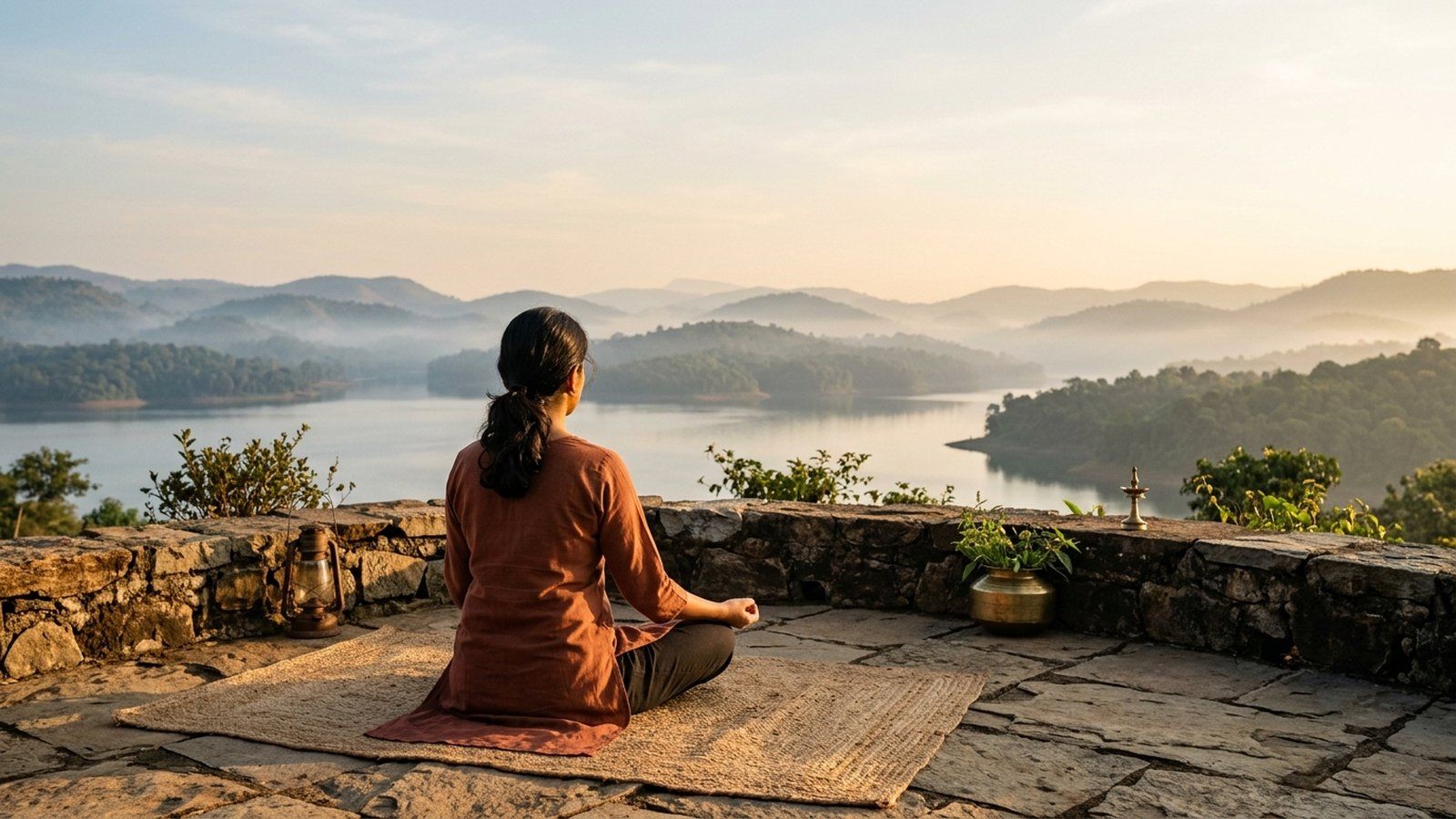
Pranayama is the yogic practice of regulating the breath. Beginners can start with five gentle techniques: the full yogic breath, alternate nostril breathing (nadi shodhana), humming bee breath (bhramari), ocean breath (ujjayi) and cooling breath (sheetali), for three to five minutes at a time and without strain. Forceful techniques and breath holds are best learned from a teacher, and some people should avoid them.
Breathing is the one automatic function we can easily control, and yoga has used that for centuries. Pranayama is the fourth of the eight limbs in Patanjali’s path, after ethics, observances and posture, and before withdrawal of the senses and meditation.
How do you begin?
Sit comfortably, on a chair or on the floor with your back supported and spine tall. Breathe through the nose unless the technique says otherwise. Keep the breath smooth and never strain. Start with three to five minutes, ideally in a quiet place and not straight after a meal. Stop if you feel dizzy, tingly or anxious.
Five gentle techniques
1. Full yogic breath (dirgha)
Inhale slowly into the belly, then the ribs, then the upper chest. Exhale in the reverse order. Practise for two to three minutes. It is the base for the other techniques and the simplest way to learn to breathe more fully.
2. Alternate nostril breathing (nadi shodhana)
Use the right hand. Close the right nostril with the thumb and inhale through the left. Close the left with the ring finger, release the right and exhale through it. Inhale through the right, switch, and exhale through the left. That is one round. Do five to ten rounds, with no breath holds at first. It is often used as a calming practice.
3. Humming bee breath (bhramari)
Inhale through the nose. On the exhale, make a steady humming sound with the lips closed, like a bee. Feel the vibration in the face and head. Repeat five to eight times. Many people find it soothing.
4. Ocean breath (ujjayi)
Breathe in and out through the nose with a slight narrowing at the back of the throat, so the breath makes a soft, steady sound like the sea. Keep it gentle. It is used in many yoga classes to pace movement and focus the mind.
5. Cooling breath (sheetali)
Curl the sides of the tongue into a tube, inhale through it, then close the mouth and exhale through the nose. Repeat five to ten times. It is traditionally used to cool the body. If you cannot curl your tongue, breathe in through slightly parted teeth with the tongue resting behind them, a variation called sheetkari.
Which techniques need a teacher?
Kapalabhati, with quick, forceful exhales, and bhastrika, with forceful inhales and exhales, are cleansing and energising practices that can cause dizziness and are commonly advised against for some people. Techniques that hold the breath, called kumbhaka, also deserve instruction. Learn these from a qualified teacher, in person, and not from a video.
Who should avoid or check first?
Gentle practices are usually fine for healthy adults. It is commonly advised that people with the following conditions check with a doctor before any breathing practice, and avoid forceful techniques and breath holds:
- pregnancy
- high blood pressure or heart disease
- epilepsy
- glaucoma or other eye conditions
- asthma or other lung disease
- anxiety or panic that is triggered by breath focus
- recent surgery
What does the research say?
Research on traditional pranayama is more limited than the research on mindfulness. One of the better-known recent trials is not about pranayama as such but about a related, exhale-focused technique. In a 2023 study in Cell Reports Medicine, participants practised one of three brief breathing exercises, or mindfulness meditation, for 5 minutes a day for about a month. The group that practised cyclic sighing, which uses long exhales, showed a greater improvement in mood and a larger drop in respiratory rate than the mindfulness group. The trial was run remotely during the pandemic, with a wearable tracker and daily surveys, and was not a clinical trial in patients.
The technique, as described by the researchers, is a double inhale through the nose followed by a long, slow exhale through the mouth. It resembles the emphasis on long exhalation found in several yogic practices, but it is not the same, so it is a promising result, not a verdict on pranayama.
For wider evidence on meditation, see what the research says about anxiety and depression.
How do you fit it into a day?
- Morning: two to three minutes of the full yogic breath, then nadi shodhana.
- Midday: a minute or two of long exhales when you feel stressed.
- Evening: bhramari before bed.
Consistency counts more than length. If you want to learn properly, many ashrams teach pranayama in beginner courses. See our guide to Rishikesh and how to choose a yoga retreat in India.
Questions readers ask
What is pranayama?
Pranayama is the yogic practice of regulating the breath. The word combines prana, often translated as vital energy or breath, and ayama, to extend or control. It is the fourth of the eight limbs described in Patanjali's Yoga Sutras.
How long should a beginner practise pranayama?
Three to five minutes a day is a sensible start. Increase slowly over weeks, and stop if you feel dizzy. A teacher can advise on longer routines.
Is alternate nostril breathing safe?
Gentle alternate nostril breathing, without holding the breath, is a mild practice that most healthy people can try. Avoid forcing the breath, and check with your doctor if you have a heart or lung condition or high blood pressure.
Is pranayama the same as breathwork?
Pranayama is the traditional Indian system. Breathwork is a broader modern term that includes practices from many sources, including some with intense or prolonged hyperventilation, which carry more risk.
Sources
Corrections
No corrections so far. If something is wrong, tell us below and we will fix it here with a dated note.
Help us get it right