Yoga · Explainer · 9 min read
Yoga Styles Explained: Hatha, Iyengar, Ashtanga, Yin and More
A plain-language guide to the main yoga styles, where each comes from, who it suits and what to be careful about.
Hatha is the umbrella term for physical yoga, Iyengar focuses on precise alignment with props, Ashtanga and Vinyasa are vigorous and flowing, Yin and restorative classes are slow and passive, and Kundalini adds breathwork, chanting and meditation. The label tells you less than the teacher does, so try a few classes before you decide.
Walk into any yoga studio and the timetable reads like a menu. Many of the styles on it come from a small number of twentieth-century teachers working in India, and the differences are mostly about pace, precision and purpose.
Hatha: the umbrella
Hatha yoga means the yoga of physical effort and refers to the tradition of postures, breathing and cleansing practices set out in medieval texts such as the Hatha Yoga Pradipika. In modern studios, “Hatha” on a timetable usually means a slower, general class: a series of postures held for a few breaths, with some pranayama. It is a good first class.
Iyengar: precision and props
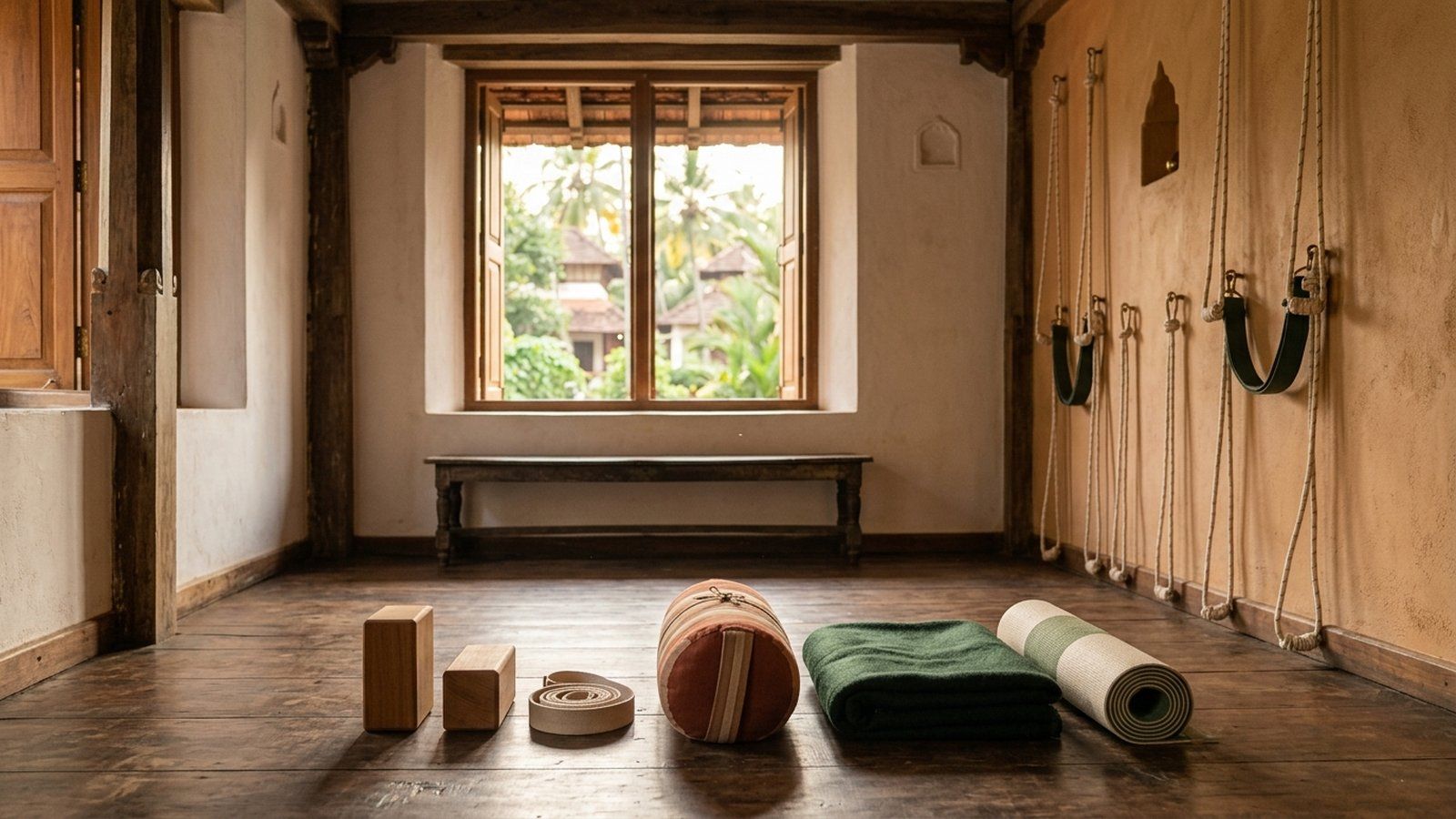
B.K.S. Iyengar (1918 to 2014) developed his method in Pune. It stresses exact alignment, long holds and the use of props such as blocks, belts and bolsters to make postures accessible. Classes are structured and detailed. It suits people who like to understand the mechanics of a posture, those recovering from minor injuries under guidance, and anyone who prefers precision to speed.
Ashtanga: a fixed sequence
Ashtanga vinyasa is a set sequence of postures linked by breath, taught by K. Pattabhi Jois in Mysuru. In traditional Mysore-style classes you practise at your own pace while the teacher helps individuals. See our guide to Ashtanga in Mysuru. It is physically demanding and suits people who like routine and effort.
Vinyasa: the flow
“Vinyasa” in a studio usually means a class that flows from one posture to the next on the breath, with sequences that change from class to class. It grew out of Ashtanga and is the most widespread style in Western studios. Classes can be gentle or intense, so read the description.
Yin and restorative: slow and passive
Yin yoga holds floor-based postures for several minutes to work on connective tissue, and restorative yoga uses props to support the body so you can rest. Both are slow and quiet. Yin as a named style is a more recent development than the traditional systems above. Both suit people who are tired, stressed or already doing intense exercise.
Kundalini: breath, chant and meditation
Kundalini yoga combines postures with breathing practices, chanting and meditation. Its modern, widely taught form was popularised in the West from the late 1960s. Classes often include repeated movements, rapid breathing and mantras. They can feel intense, so ask the teacher what the class involves if you have a health condition.
Sivananda, Bihar School and Integral: the ashram styles
Much of the yoga taught in Indian ashrams follows an integrated approach: asana, pranayama, relaxation, chanting and philosophy, as taught in traditions such as the Sivananda line (associated with Rishikesh) and the Bihar School of Yoga in Munger, founded in 1964. These suit people who want a broader practice than exercise alone. See our guide to Rishikesh.
Which style should you choose?
- New to exercise or stiff: slow Hatha, a beginner Iyengar class, or restorative.
- Want to understand the details: Iyengar.
- Want a workout: Vinyasa or Ashtanga.
- Stressed and tired: Yin or restorative.
- Interested in the breath and the inner side: Kundalini or an ashram-style class.
Try at least three different teachers. A good class in a style you thought you would dislike beats a mediocre class in your favourite.
What does the research say?
The most useful evidence is for chronic low back pain. The Cochrane Collaboration’s 2022 update of its review concluded that yoga may reduce symptoms by a small amount compared with no specific treatment, from studies with short follow-up, and that there was little or no difference between yoga and other back-focused exercise at three and six months. The earlier 2017 version covered 12 trials with 1,080 participants and found that about 5 per cent more yoga participants than comparison participants reported increased back pain, which the authors thought may be similar to the risk of other back exercise.
Two points follow. Yoga is a reasonable form of exercise and no miracle. And intense styles carry the usual risks of intense exercise, so build up slowly.
Where to learn
India is the best place to study the roots of these styles, and several are tied to specific cities: Iyengar to Pune, Ashtanga to Mysuru, the integrated ashram styles to Rishikesh and Munger. If you want to turn a style into a trip, how to choose a yoga retreat in India walks through the questions to ask.
Questions readers ask
Which yoga style is best for beginners?
A slow Hatha class or a beginner Iyengar class is a common starting point because the pace is manageable and the teacher explains each posture. Gentle or restorative classes are also fine. The teacher matters more than the label.
What is the difference between Hatha and Vinyasa?
Hatha is a broad term for postures and breathing practice, often taught slowly with pauses between postures. Vinyasa links postures in a flowing sequence timed with the breath, so it is usually faster and more athletic.
Is yoga good for back pain?
The best evidence is for chronic low back pain. A Cochrane review updated in 2022 found yoga may reduce symptoms by a small amount compared with no specific treatment, and was about as effective as other back-focused exercise at three and six months. Seek medical advice for new or severe pain.
Do I have to be flexible to do yoga?
No. Flexibility is something yoga can build over time, not a requirement. Good teachers offer variations and props for stiff bodies.
Sources
Corrections
No corrections so far. If something is wrong, tell us below and we will fix it here with a dated note.
Help us get it right