Meditation · Explainer · 9 min read
Types of Meditation Compared: Vipassana, Zen, TM and Mindfulness
What you actually do in each major style of meditation, how long it takes, who teaches it and which suits which person.
Meditation is an umbrella term for several different practices. Vipassana, Zen and mindfulness train attention by observing the breath, body or thoughts. Transcendental Meditation uses a silently repeated mantra, and loving-kindness practice cultivates a feeling toward others. For most beginners, a few minutes of breath awareness each day is the simplest start, and mindfulness has the strongest research base.
People say “I meditate” and mean very different things. The differences matter if you are choosing a course or a retreat in India, where nearly all of these traditions are taught.
Vipassana: insight
What you do: observe breath and then bodily sensations in sequence, without reacting. Where it comes from: the Buddhist tradition, taught in India in the form associated with S.N. Goenka. How it is taught: in a 10-day silent course. Best for: people who want an intensive, structured experience and can tolerate strictness. See what is Vipassana.
Zen: sitting practice
What you do: zazen, seated meditation, often counting or following the breath, or sitting with open awareness. In the Rinzai school, students also work with koans, short paradoxical stories. Where it comes from: Chan Buddhism in China, later Japan. Best for: people who like form, silence and a simple routine. If you want to learn Zen, look for a named teacher and a lineage.
Mindfulness: the secular programme
What you do: pay attention to the present moment, including breath, body and thoughts, in short daily practices. Where it comes from: Buddhist practice adapted for health care. Jon Kabat-Zinn developed the best-known programme, Mindfulness-Based Stress Reduction, at the University of Massachusetts Medical Center in 1979. It is an eight-week course. Best for: people who want a structured, non-religious introduction with some research behind it.
Transcendental Meditation: mantra
What you do: silently repeat a personal mantra for about twenty minutes, twice a day, sitting comfortably. Where it comes from: Maharishi Mahesh Yogi, who taught in Rishikesh and then worldwide. How it is taught: by certified teachers for a fee, in a set course. Best for: people who want a simple daily routine and prefer a mantra to watching the breath.
Metta: loving-kindness
What you do: direct wishes of goodwill, first toward yourself and then toward others, including difficult people. Where it comes from: Buddhist practice, and it closes a Goenka-style Vipassana course. Best for: people who find breath-watching dry, or who want to work on warmth and forgiveness.
Yogic meditation and japa
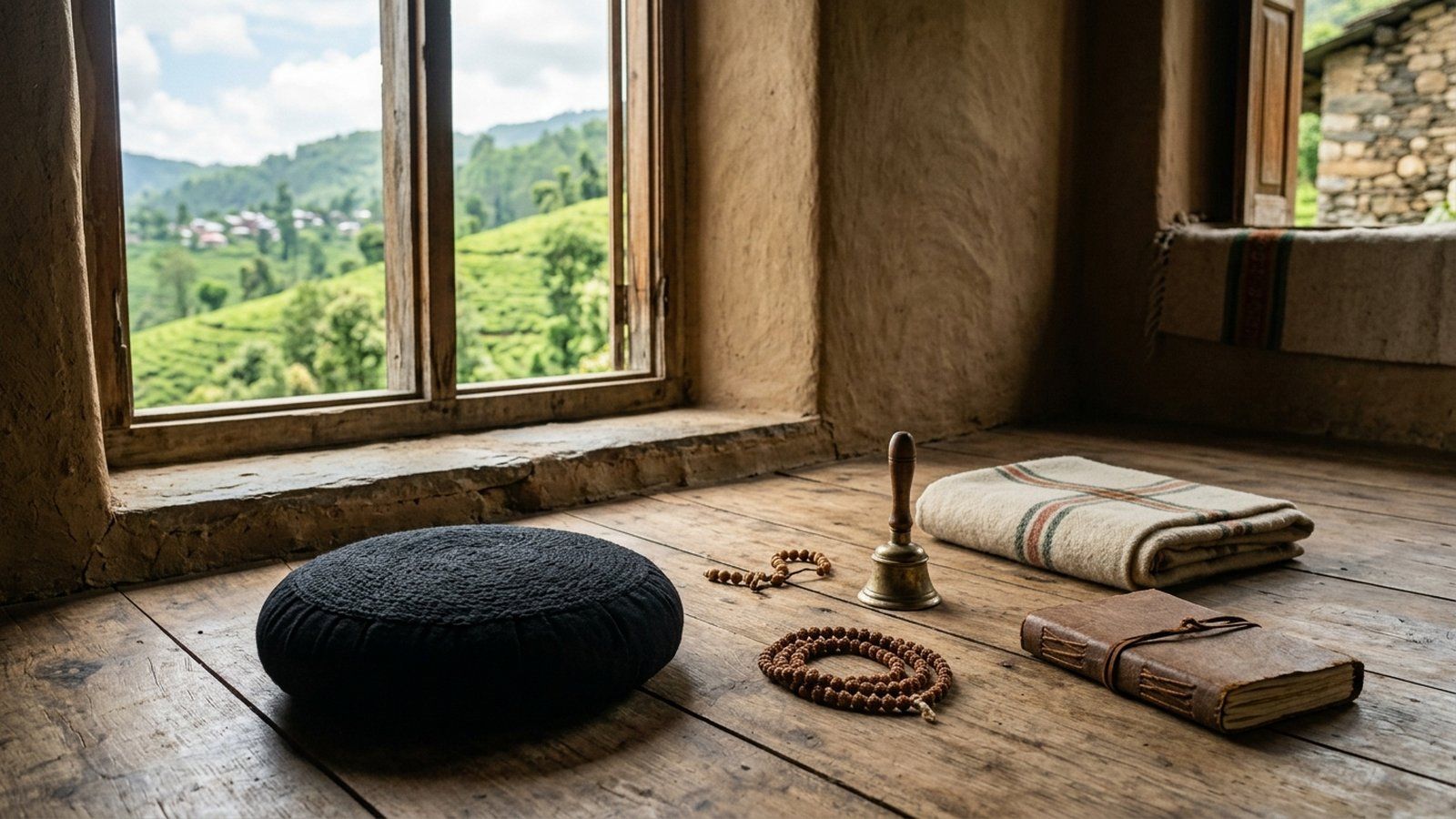
Within yoga traditions, meditation (dhyana) follows concentration (dharana) in Patanjali’s eight limbs. Practices include focusing on a point, a mantra or a symbol, and japa, the repetition of a mantra, often using a string of beads. Ashrams typically teach these alongside postures and breath practice. See how to choose a yoga retreat in India.
Which type should you choose?
- You want to try it with no commitment: guided mindfulness or simple breath awareness for five to ten minutes a day.
- You want an evidence-backed course: an eight-week mindfulness programme.
- You want a deep, structured retreat: a Vipassana course, after trying shorter practice first.
- You like repetition and a routine: TM or japa.
- You want to feel kinder, not just calmer: metta.
What does the research say?
The strongest evidence is for mindfulness programmes. The 2014 JAMA Internal Medicine review found moderate evidence of small to moderate benefit for anxiety, depression and pain from 47 trials, mostly of mindfulness-based programmes, and no evidence that meditation beat other active treatments. Other types have been studied less, which does not mean they do not work. Details are in what the research says about anxiety and depression.
A practical way to start
- Sit for five minutes a day, at the same time, for two weeks.
- Follow the breath at the nostrils or the belly. When your mind wanders, which it will, return.
- Try a course or a teacher, in person if you can.
- Add a retreat only after you have a daily habit. Our guide to silent retreats covers preparation.
For places in India to learn, see where to meditate in India.
Questions readers ask
What is the easiest type of meditation for beginners?
Simple breath awareness, a few minutes a day, is the usual starting point. Guided mindfulness courses, such as the standard eight-week programmes, give structure and support.
What is the difference between Vipassana and mindfulness?
Vipassana is a traditional Buddhist insight practice taught in intensive retreats. Mindfulness programmes draw on Buddhist practice but are secular, shorter and designed for health and stress.
What is Transcendental Meditation?
It is a mantra-based technique brought to the West by Maharishi Mahesh Yogi. It is usually practised for about twenty minutes twice a day and taught by certified teachers for a fee.
Which type of meditation has the most research behind it?
Mindfulness-based programmes. A 2014 review of meditation programmes found moderate evidence of benefit for anxiety, depression and pain, mostly from mindfulness trials.
Sources
Corrections
No corrections so far. If something is wrong, tell us below and we will fix it here with a dated note.
Help us get it right